

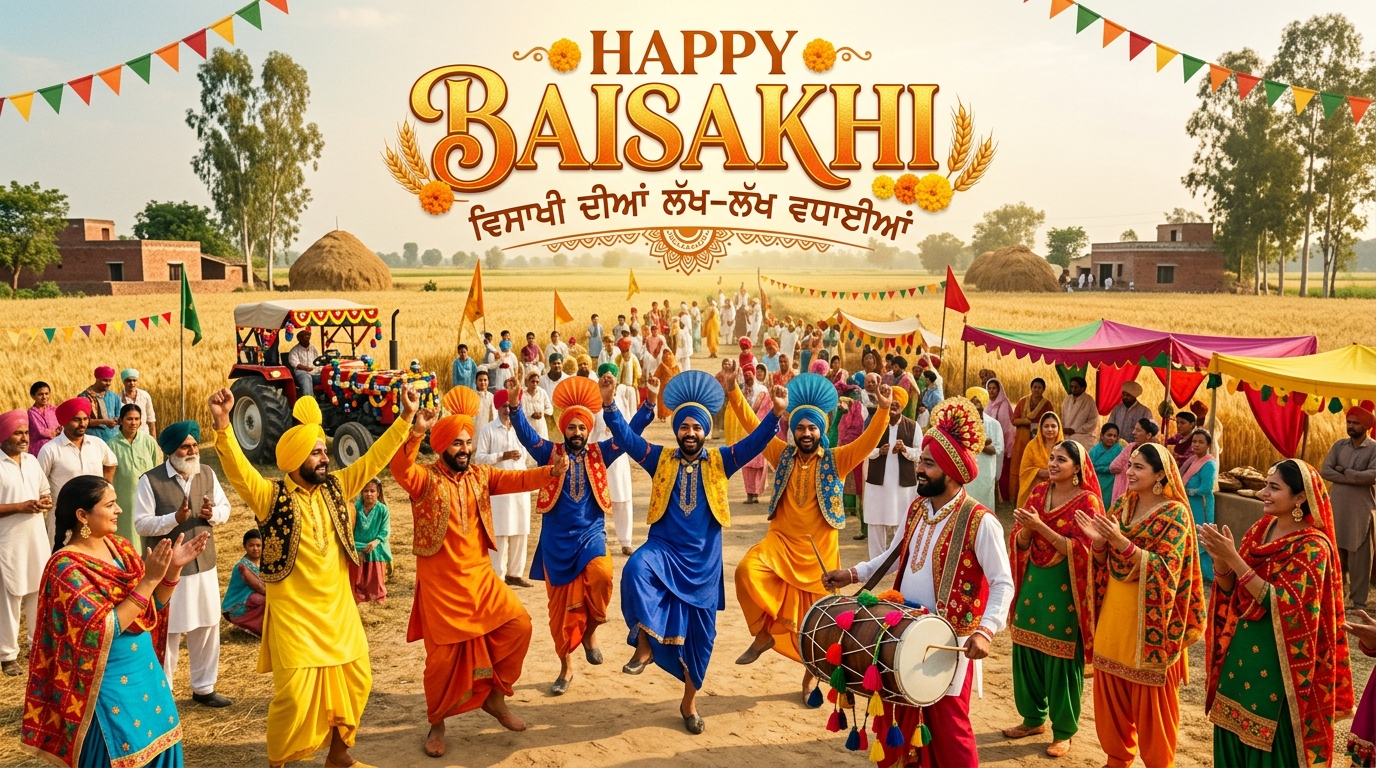
Baisakhi arrives with the warmth of spring, golden wheat fields swaying in the breeze, and a happiness that brings entire communities together. In Punjab, the sight of ripe crops shining beneath the sunlight represents months of hard work, hope, and prayers finally turning into something worth celebrating.
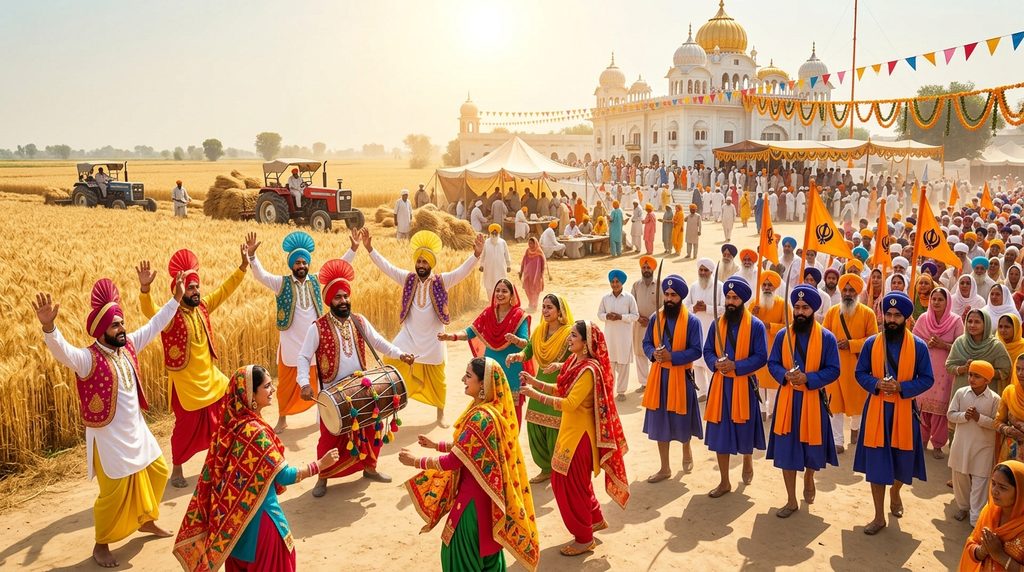
Known as Baisakhi or Vaisakhi, this festival combines the joy of the spring harvest with a deeply meaningful chapter in Sikh history. For farmers, it marks the gathering of crops and the rewards of their labour. For Sikhs, it commemorates the formation of the Khalsa by Guru Gobind Singh in 1699.
From prayers at gurdwaras to lively folk dances, traditional food, and community gatherings, Baisakhi offers a beautiful reminder of gratitude, courage, and togetherness.
What Is Baisakhi?
Baisakhi Festival is a spring harvest celebration observed mainly in Punjab and by Punjabi communities around the world. It usually falls on April 13 or 14, marking the beginning of the solar month of Vaishakha.
The festival is closely associated with the harvesting of Rabi crops, particularly wheat. It also holds great religious importance in Sikhism, as Vaisakhi marks the establishment of the Khalsa in 1699.
Although its customs vary between communities, the festival generally brings together religious observance, agricultural traditions, and cultural celebrations.
When Is Baisakhi Celebrated?
Baisakhi is generally observed on April 13 or 14 each year, depending on the solar calendar. In 2026, it was celebrated on April 14 by many communities.
Celebrations often begin in the morning with prayers at gurdwaras, followed by religious programmes, community meals, and cultural events. In Punjab, local fairs and processions may continue throughout the day.
People planning to attend major celebrations should check local announcements for programme timings and arrangements.
History of the Baisakhi Festival
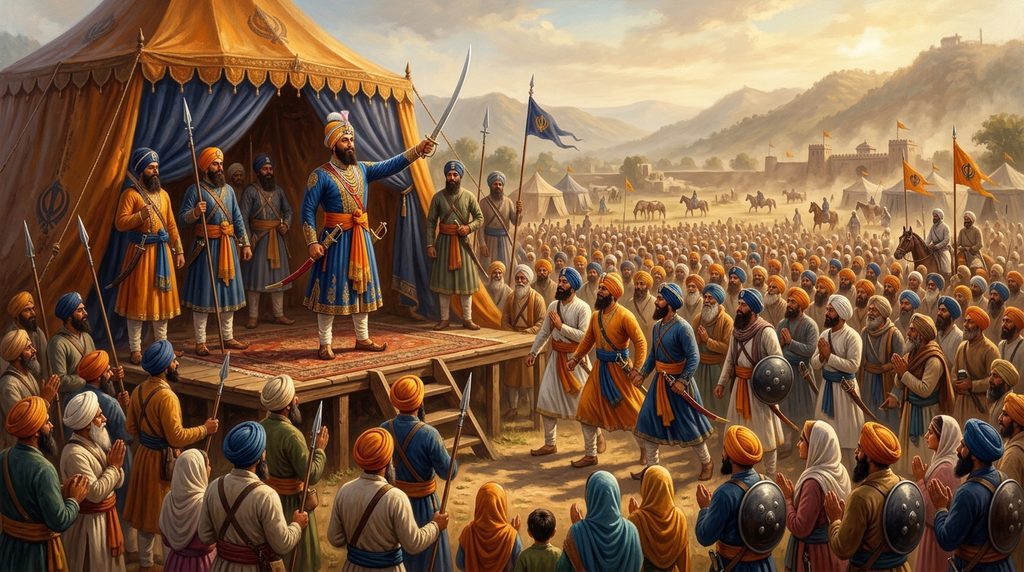
The Baisakhi festival history reflects Punjab’s agricultural heritage and the development of Sikh religious identity.
For generations, farmers have celebrated the spring harvest as a time of gratitude for their crops and the effort invested throughout the growing season. The festival also became a defining date in Sikh history because of the events of 1699 at Anandpur Sahib.
Another important historical connection is the Jallianwala Bagh Massacre of April 13, 1919. This tragic event in Amritsar became a significant moment in India’s struggle against British colonial rule.
These historical associations give Baisakhi several layers of meaning, from seasonal celebration to religious commitment and remembrance.
Religious Significance of Baisakhi in Sikhism
The religious significance of Baisakhi centres on the Khalsa, the community established by Guru Gobind Singh to uphold spiritual discipline, equality, courage, and justice.
Sikhs often visit gurdwaras to listen to Gurbani, participate in prayers, and reflect on the teachings of the Sikh Gurus. Special services may include devotional singing and community gatherings.
The festival also highlights seva, or selfless service. Preparing meals, serving visitors, cleaning places of worship, and helping people in need are meaningful expressions of faith.
For many devotees, Baisakhi is a time to renew their commitment to living honestly, treating others equally, and protecting those who are vulnerable.
The Formation of the Khalsa in 1699
One of the most significant events associated with Vaisakhi occurred on April 13, 1699, at Anandpur Sahib in present day Punjab, India.
According to Sikh tradition, Guru Gobind Singh addressed a gathering and called for a volunteer willing to demonstrate complete devotion to the faith. Five men stepped forward and became known as the Panj Pyares, meaning the Five Beloved Ones.
Guru Gobind Singh initiated them through Khande ki Pahul, a ceremony involving Amrit, sacred sweetened water prepared with a double edged sword and prayers. He then received initiation from the five, reflecting the principle of shared spiritual dignity.
The establishment of the Khalsa became a defining moment in Sikh history. It strengthened a collective identity rooted in faith, discipline, equality, and the responsibility to stand against injustice.
The Five Ks of the Khalsa
The Five Ks of the Khalsa are articles of faith traditionally worn by initiated Sikhs. Each represents an important spiritual principle.
- Kesh: Uncut hair, representing acceptance of God’s creation and Sikh identity.
- Kara: A steel bracelet that reminds the wearer to act with integrity and remain connected to the Guru’s teachings.
- Kangha: A wooden comb symbolising cleanliness, discipline, and personal care.
- Kirpan: A ceremonial sword representing the responsibility to protect the vulnerable and oppose injustice.
- Kachchera: Special shorts associated with self discipline, dignity, and moral responsibility.
These articles are expressions of faith rather than merely cultural accessories. During Baisakhi gatherings, they are often visible as initiated Sikhs participate in religious observances.
Baisakhi and the Jallianwala Bagh Massacre
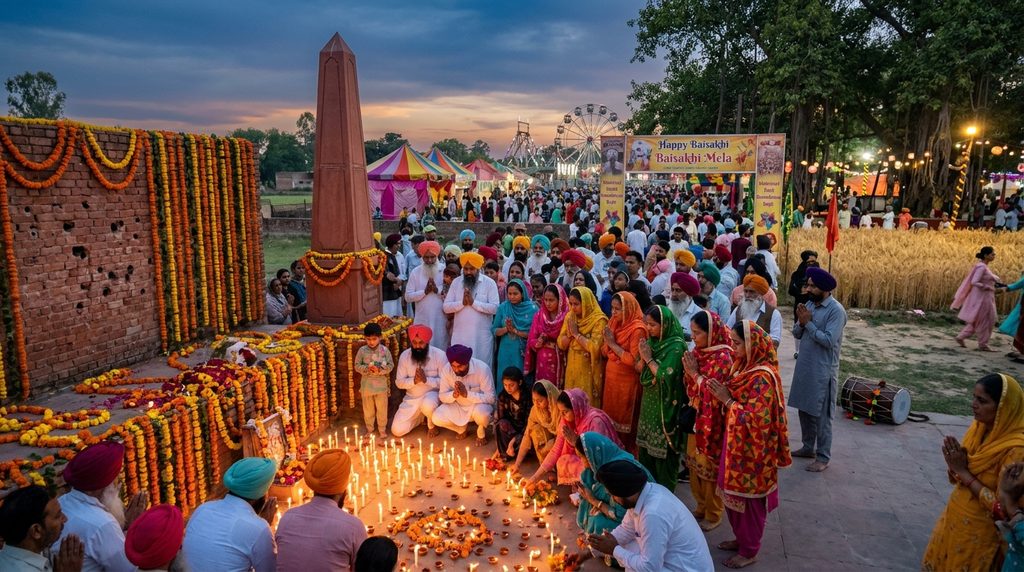
The Jallianwala Bagh Massacre took place on April 13, 1919, in Amritsar, during the period of British colonial rule in India.
Thousands of people had gathered at Jallianwala Bagh, a walled public garden, amid growing political unrest. British troops under Brigadier General Reginald Dyer opened fire on the crowd, causing widespread loss of life and injuries.
The massacre intensified opposition to British rule and became one of the most painful events in India’s independence movement.
Today, Jallianwala Bagh serves as a memorial to those who lost their lives. Its connection with Baisakhi makes the date a time not only for celebration but also for remembering the struggle for freedom, justice, and human dignity.
Agricultural Significance of Baisakhi
The agricultural roots of Baisakhi in India are especially visible across Punjab, where wheat farming has long played an important role in rural life.
Farmers spend months preparing their fields, planting seeds, managing irrigation, and protecting crops. When the wheat ripens, the golden fields represent the results of patience, skill, and hard work.
The harvest provides food and income for farming families, making it an important moment in the agricultural calendar. Baisakhi gives communities an opportunity to express gratitude for fertile land, favourable weather, and a successful growing season.
The festival also recognises the contribution of farmers whose work supports communities far beyond the villages where crops are grown.
How Is Baisakhi Celebrated in Punjab?
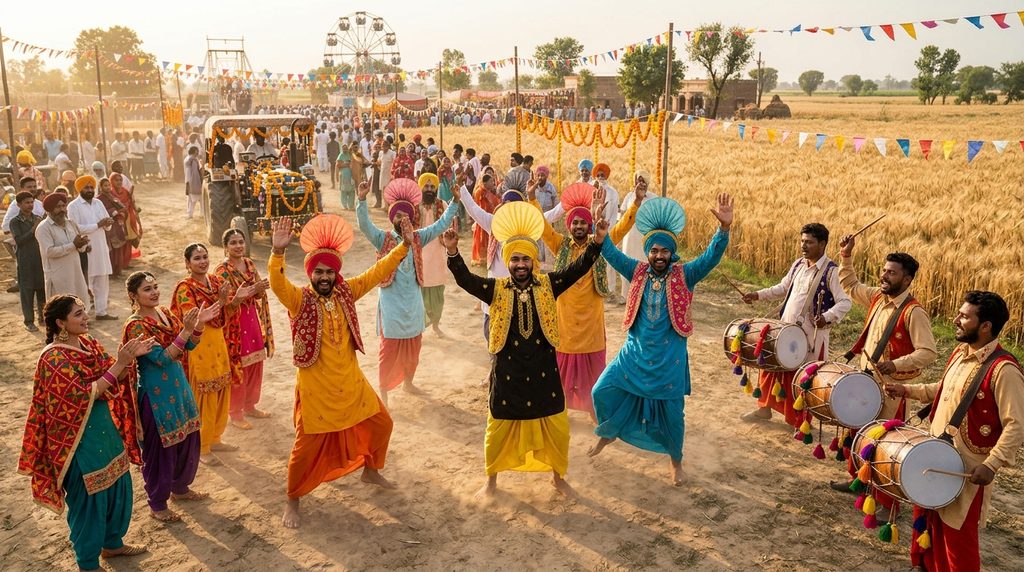
The Baisakhi celebration in Punjab combines religious devotion, cultural performances, and traditional festivities.
Gurdwaras organise prayers, devotional singing, and community meals. Many places also hold Nagar Kirtan processions, during which Sikh hymns are sung as devotees move through local streets.
Baisakhi fairs bring together families, visitors, and local communities. These events may feature traditional clothing, handicrafts, food stalls, folk music, and dance performances.
In rural areas, the harvest adds special meaning to the occasion. Families celebrate the season’s work, while children and adults enjoy the lively atmosphere of local gatherings.
Baisakhi Traditions and Customs
Families observe Baisakhi traditions and customs in different ways, depending on their location and religious practices.
Common activities include:
- Visiting a gurdwara for prayers and devotional singing.
- Participating in Nagar Kirtan processions.
- Serving or sharing langar with the community.
- Giving thanks for the spring harvest.
- Wearing traditional Punjabi clothing.
- Attending local fairs and cultural programmes.
- Enjoying Bhangra, Giddha, and Punjabi folk music.
- Sharing sweets and festive meals with relatives and neighbours.
- Volunteering through seva and charitable activities.
- Teaching children about Guru Gobind Singh and the Khalsa.
Some families begin the day with prayers and spend the afternoon with relatives. Others attend public celebrations or help prepare food for community gatherings.
These customs preserve cultural heritage while allowing younger generations to understand the festival’s deeper meaning.
Traditional Baisakhi Food, Music and Dance
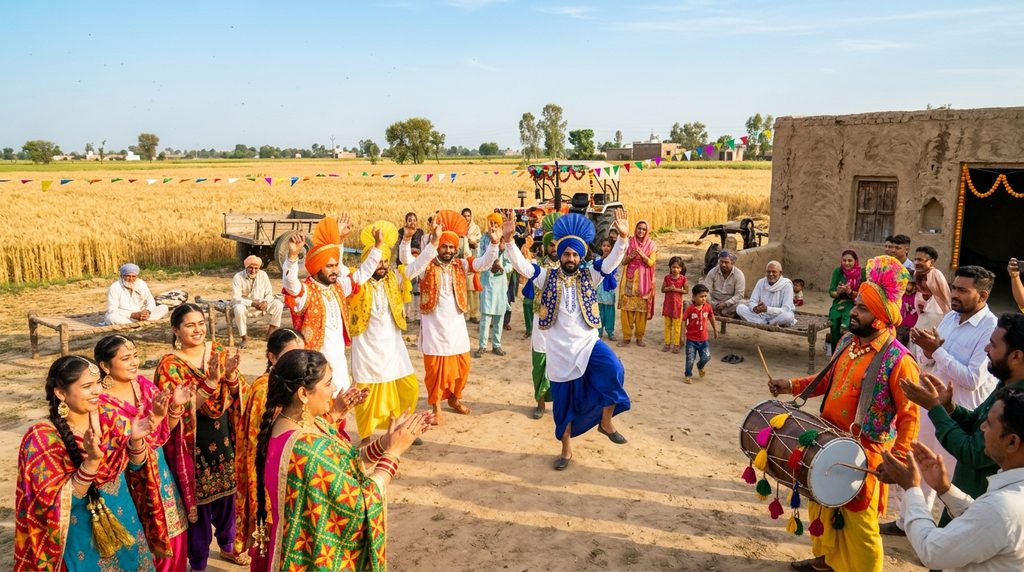
Food and entertainment contribute to the cheerful atmosphere of Baisakhi celebrations. Traditional Punjabi meals are often prepared at home or shared during community gatherings.
Popular dishes may include makki di roti, sarson da saag, chole, dal, and various sweets. Kada prasad, a traditional sweet offering, is also associated with Sikh religious settings. Menus vary by household, and langar provides a meal for visitors at participating gurdwaras.
Music and dance bring energy to fairs and cultural programmes.
- Bhangra: An energetic Punjabi folk dance traditionally associated with the harvest, performed to lively rhythms.
- Giddha: A traditional Punjabi women’s folk dance featuring clapping, expressive movements, and playful verses known as boliyan.
With the beat of the dhol and colourful traditional clothing, these performances celebrate the cultural identity and community spirit of Punjab.
Golden Temple Baisakhi Celebration
The Golden Temple, also known as Sri Harmandir Sahib, in Amritsar is an important destination for Sikhs during Baisakhi.
Devotees visit to participate in prayers, listen to kirtan, and experience the spiritual atmosphere of the sacred complex. Its significance in Sikh history makes the temple a meaningful place to observe the occasion.
Visitors may also explore Jallianwala Bagh to learn about the city’s connection with India’s independence movement. Since large crowds can gather during major religious celebrations, checking local travel information before visiting is advisable.
For many pilgrims, the experience is as much about shared devotion and belonging as it is about visiting a historic place.
Baisakhi Celebrations Across India
Although Baisakhi Festival in Punjab is particularly prominent, several other regions celebrate seasonal or New Year festivals around the same time.
| Festival | Region | Main association |
|---|---|---|
| Bohag Bihu | Assam | Assamese New Year and spring celebrations |
| Poila Baisakh | West Bengal | Bengali New Year |
| Puthandu | Tamil Nadu | Tamil New Year |
| Vishu | Kerala | Traditional Malayalam New Year observance |
| Pana Sankranti | Odisha | Odia New Year and seasonal observances |
| Shad Suk Mynsiem | Meghalaya | Khasi cultural dance festival |
| Aoleang Festival | Nagaland | Spring festival of the Konyak Naga community |
These festivals have distinct histories and customs. Their seasonal timing, however, illustrates how different Indian communities celebrate renewal, gratitude, and cultural identity.
Baisakhi Festival Around the World
The Vaisakhi festival around the world connects Sikh and Punjabi communities far beyond India.
In Canada, the United Kingdom, the United States, Australia, and other countries, gurdwaras often organise prayers, community meals, cultural performances, and public processions. Some cities host large Vaisakhi parades attended by people from many different backgrounds.
These celebrations help younger generations learn about Sikh history while introducing the wider community to Punjabi traditions.
The practice of langar is especially meaningful at these gatherings because it welcomes people to share a meal regardless of their religion, wealth, or background.
Frequently Asked Questions About Baisakhi
What is Baisakhi?
Baisakhi is a spring harvest festival associated with Punjab. It is also a major Sikh religious occasion commemorating the establishment of the Khalsa in 1699.
When is Baisakhi celebrated?
Baisakhi usually falls on April 13 or 14, depending on the solar calendar and the year.
Why is Baisakhi important to Sikhs?
It commemorates Guru Gobind Singh’s establishment of the Khalsa at Anandpur Sahib in 1699 and encourages reflection on Sikh values such as equality, courage, and selfless service.
What happened on Baisakhi in 1699?
Guru Gobind Singh initiated the Panj Pyares through Khande ki Pahul and established the Khalsa, a defining event in Sikh history.
What is the connection between Baisakhi and Jallianwala Bagh?
The Jallianwala Bagh Massacre occurred on April 13, 1919, in Amritsar. British troops fired on a gathering of people, and the tragedy became a significant event in India’s independence struggle.
Which dances are performed during Baisakhi?
Bhangra and Giddha are well-known Punjabi folk dances performed at cultural gatherings and harvest celebrations.
What foods are associated with Baisakhi?
Popular foods include makki di roti, sarson da saag, chole, dal, sweets, and kada prasad. Specific dishes depend on family and community traditions.
How do people celebrate Baisakhi outside India?
Communities commonly organise gurdwara prayers, Nagar Kirtan processions, langar, cultural programmes, and public gatherings.
read more;
Conclusion
Baisakhi brings together the agricultural heritage of Punjab, the spiritual legacy of Guru Gobind Singh, and the importance of community service. Its celebrations are joyful, but its history also encourages reflection on courage, equality, and the sacrifices made in the pursuit of justice.
Whether someone observes the occasion through prayers, traditional food, folk dances, or a community gathering, the festival offers an opportunity to appreciate the people and traditions that make life meaningful.
May this Baisakhi bring peace to your home, prosperity to your work, and happiness to your family. May it inspire kindness, strengthen community bonds, and remind us to welcome every new season with gratitude and hope.