


Some Hindu legends remain alive for centuries because they offer more than extraordinary events; they also teach lessons about courage, devotion, and self discipline. The story of God Ayyappan is one such sacred tradition, cherished by millions of devotees, particularly in southern India.
Known as Lord Ayyappa, Ayyappa Swamy, and Manikandan, this revered Hindu deity is closely associated with the Sabarimala Temple in Kerala, India. His story combines divine origins, a royal childhood, the defeat of a powerful demoness, and the remarkable legend of a journey to obtain tigress milk.
For devotees, Ayyappa represents righteousness, humility, and control over worldly desires. His annual pilgrimage attracts worshippers who prepare through prayer and disciplined living, making his tradition an important part of Hindu religious and cultural life.
Who Is Lord Ayyappa in Hinduism?
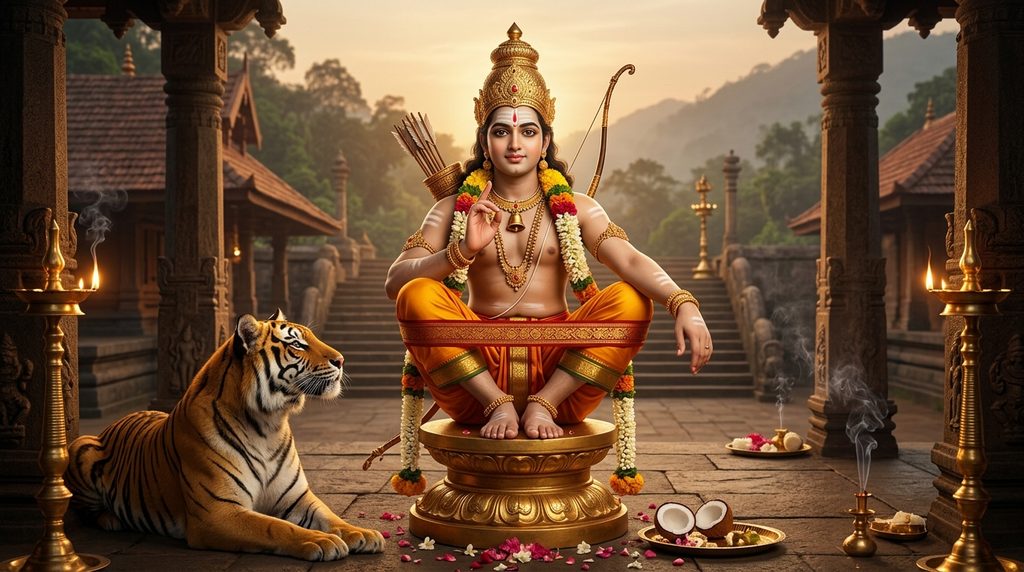
Hindu God Ayyappa is especially worshipped in Kerala and is traditionally associated with the divine union of Lord Shiva and Lord Vishnu in Vishnu’s Mohini form.
This connection gives him the name Hariharan Puthiran, meaning the son of Hari and Hara, names associated with Vishnu and Shiva.
Ayyappa is revered as a protector of righteousness whose divine mission is connected with defeating evil and restoring balance. His worship emphasizes courage, compassion, humility, and spiritual discipline.
His most famous shrine, Sabarimala, has become a major pilgrimage destination where devotees seek blessings and reflect on their personal conduct.
The Birth Story of Lord Ayyappa
According to a popular devotional legend, the gods faced a serious threat from Mahishi, a powerful demoness whose actions disturbed the cosmic order. Her defeat required a divine figure with extraordinary abilities.
The story describes the birth of Ayyappa through the divine connection between Lord Shiva and Lord Vishnu in the form of Mohini. Because of this unique origin, Ayyappa is known as Hariharputhra, a name symbolizing the coming together of the powers associated with Shiva and Vishnu.
His birth was understood as part of a divine plan to defeat Mahishi and restore harmony. Although details differ among regional traditions, this purpose remains central to the story of his incarnation.
Why Is Lord Ayyappa Called Manikandan?

The name Manikandan comes from the traditional story of Ayyappa’s discovery as a child. King Rajashekhara of Pandalam is said to have found the boy near the Pampa River, with a small sacred bell around his neck.
The word mani refers to a bell or jewel, while kandan is traditionally associated with the neck. The name therefore recalls the bell that marked the mysterious child’s arrival.
The king had long wished for a child and welcomed Manikandan into his royal household. He raised the boy with affection, unaware at first of his extraordinary divine identity.
This discovery became the beginning of the legend that would eventually connect the young prince with the sacred hills of Sabarimala.
The Childhood and Royal Life of Manikandan
Manikandan grew up in the kingdom of Pandalam under the care of King Rajashekhara and the royal family. He received an education and training appropriate for a prince, including traditional knowledge and martial skills.
The young prince was admired for his intelligence, bravery, and kindness. According to devotional accounts, he often used his abilities to help others rather than seeking personal recognition.
As the royal household’s circumstances changed, questions surrounding the succession became important. Some versions of the story describe the queen and a royal minister, or Diwan, becoming involved in a plan that would send Manikandan into the forest.
These events lead directly to one of the best known episodes in Ayyappa mythology: the mission to obtain tigress milk.
The Legend of Lord Ayyappa and Tigress Milk

The Lord Ayyappa tigress milk story is a defining episode in his traditional biography. According to a popular account, the queen became ill, and a royal physician claimed that tigress milk was necessary for her recovery.
Obtaining such milk was an extremely dangerous task. Manikandan nevertheless volunteered to undertake the journey, despite the risks involved.
Some versions portray the demand as a conspiracy intended to remove him from the palace and protect the interests of the queen’s own son. Other retellings differ in how they explain the queen’s actions, so these details belong to the legend rather than established history.
During his journey, Manikandan fulfils his divine mission by defeating Mahishi. He then returns to Pandalam in a miraculous manner, traditionally described as riding a tiger or accompanied by a procession of tigers and tigresses.
The extraordinary sight astonishes the royal household and reveals his divine identity. The episode symbolizes courage, the triumph of righteousness, and the limits of human understanding when confronted with the divine.
Lord Ayyappa and the Demon Mahishi

The defeat of Mahishi explains the central purpose of Ayyappa’s divine incarnation. In popular Hindu mythology, Mahishi had acquired extraordinary power and threatened the balance between good and evil.
When Manikandan encounters her during his forest journey, he confronts the threat and defeats her through his divine strength. The victory restores harmony and fulfils the mission associated with his birth.
Mahishi should not automatically be confused with Mahishasura, another figure in Hindu mythology. Although their names are similar, they have distinct roles in traditional stories.
For devotees, this battle represents more than a mythological victory. It serves as a reminder to overcome harmful qualities such as arrogance, greed, anger, and selfishness through wisdom and self-control.
How Manikandan Revealed His Divine Identity
When Manikandan returned to Pandalam with the tigers, the royal household realized that the young prince was no ordinary child. The seemingly impossible mission had become the revelation of his divine nature.
King Rajashekhara, who had raised him with deep affection, is traditionally portrayed as both astonished and emotionally moved. His relationship with Manikandan gives the story a human dimension, balancing its supernatural events with a parent’s love for a child.
According to popular accounts, Ayyappa explained that his earthly mission had been fulfilled and that he was destined to be worshipped at Sabarimala. His future would be connected with a sacred shrine rather than the royal throne.
This episode marks the transition from the story of Manikandan’s childhood to the worship of Lord Ayyappa.
How Lord Ayyappa Became Associated With Sabarimala

The Sabarimala Ayyappa Temple, situated in the forested hills of Kerala, is the principal pilgrimage shrine associated with Lord Ayyappa.
Traditional accounts connect the establishment of the shrine with King Rajashekhara of Pandalam, who is said to have followed Ayyappa’s divine instructions.
Some narratives also associate sacred sites along India’s western coast with Lord Parasuram, although these legendary accounts vary.
Over time, Sabarimala developed into one of India’s best known pilgrimage destinations. Its religious importance comes from the worship of Ayyappa, the customs surrounding the pilgrimage, and the spiritual discipline expected of devotees.
The temple’s setting among hills and forests contributes to the sense of undertaking a journey away from everyday distractions and toward a place of prayer and reflection.
Sabarimala Temple and Its Spiritual Significance
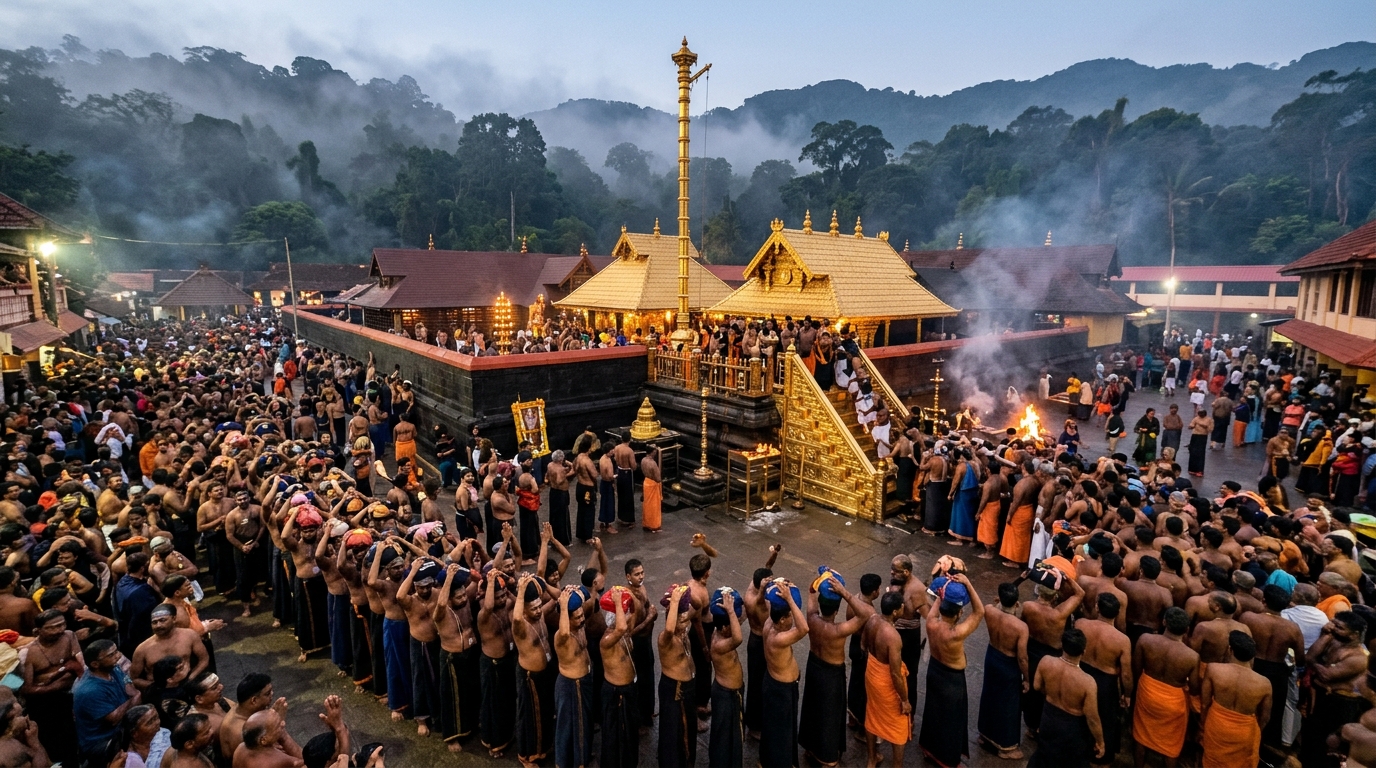
The temple is located in Kerala’s Western Ghats and attracts pilgrims from across India and beyond. Visiting the shrine involves physical preparation, awareness of local conditions, and respect for religious customs.
One of its most recognized features is the 18 sacred steps, known as Pathinettam Padi. These steps hold symbolic importance in Ayyappa worship, with different devotional traditions offering interpretations connected to spiritual growth and self discipline.
The Pampa River is another important location along the pilgrimage route. Devotees commonly gather there for prayers and traditional observances before continuing toward the shrine.
At Sabarimala, pilgrims seek darshan, the sacred experience of viewing the deity. For many, reaching the temple represents the completion of weeks of preparation and a personal commitment to faith.
Because the route can be physically demanding and crowded during festival periods, visitors should check official temple announcements for current entry arrangements, safety requirements, and travel guidance.
Ayyappa Worship and the 41 Day Vratham
The 41 day Ayyappa vratham is a traditional period of spiritual preparation observed by many devotees before visiting Sabarimala. Practices differ according to family customs, religious teachers, and temple guidance.
During this period, devotees commonly emphasize prayer, simple living, self-control, and respectful conduct.
Traditional observances may include vegetarian food, abstinence from alcohol and other intoxicants, wearing customary clothing, and practising brahmacharya, or celibacy and restraint according to one’s vows.
Many devotees also seek guidance from an experienced spiritual teacher or guru before beginning the observance.
The purpose of the vratham is to cultivate discipline and humility, rather than simply to complete a list of religious rules. Devotees are encouraged to practise patience, avoid unnecessary conflict, and show compassion in daily life.
Pilgrims should confirm the practices relevant to their tradition with a trusted religious guide or official temple source.
Important Ayyappa Worship Rituals and Offerings
Ayyappa worship includes devotional practices that express reverence and prepare pilgrims for their spiritual journey.
- Prayer and chanting: Devotees recite Ayyappa’s name and sing devotional hymns at home, in temples, and during pilgrimage.
- Sacred garland: Many devotees wear a garland when beginning their period of religious discipline.
- Irumudi Kettu: This traditional bundle contains pilgrimage offerings and other items prepared according to customary guidance.
- Coconut offerings: Coconuts, sometimes prepared with ghee, are used in particular Ayyappa related rituals.
- Pampa River observances: Pilgrims may perform prayers or ritual bathing while following local safety and environmental instructions.
- Darshan: Visiting the shrine and seeking the deity’s presence is the central purpose of the pilgrimage.
- Prasada: Blessed temple offerings are received with reverence. Aravana payasam is among the offerings associated with Sabarimala.
- Service to fellow pilgrims: Helping others and sharing responsibilities reflect the values of humility and compassion associated with Ayyappa worship.
Ritual details can vary, so devotees should follow the instructions provided by the relevant temple and religious authorities.
Makar Sankranti and the Sabarimala Pilgrimage
Makar Sankranti is a Hindu festival associated with the Sun’s transition into Capricorn in the traditional Indian calendrical system. At Sabarimala, this period is closely connected with the important Makaravilakku observance.
Many devotees plan their pilgrimage around the festival season, when the shrine receives large numbers of worshippers. The occasion carries religious significance and is associated with established local traditions.
Visitors should check the official Sabarimala schedule before travelling, as entry arrangements, crowd management measures, and other requirements can change during major festivals.
For devotees, this period is an opportunity to renew their spiritual commitments and participate in a tradition that has been passed down through generations.
The Spiritual Teachings of Lord Ayyappa

The mythology of Ayyappa conveys several values that remain relevant in everyday life.
Self discipline is reflected in the vratham, which encourages devotees to develop control over their habits and actions. Courage appears in Manikandan’s willingness to undertake a dangerous mission, while humility is reflected in the shared discipline of pilgrims from different backgrounds.
The story also emphasizes compassion and responsibility. Manikandan’s traditional portrayal as a helpful and courageous child reminds devotees that strength becomes meaningful when it benefits others.
These teachings can be applied beyond religious settings. Facing difficult decisions calmly, treating others fairly, and controlling anger are practical ways to reflect the values associated with Ayyappa.
Cultural Importance of Lord Ayyappa in Kerala
Lord Ayyappa is deeply connected with Kerala’s religious and cultural traditions. His worship includes temple rituals, devotional songs, family customs, and organized pilgrimages.
For many families, travelling to Sabarimala is a recurring tradition. Experienced devotees guide newcomers, groups share responsibilities, and songs help preserve stories about Ayyappa’s divine origin and heroic deeds.
The pilgrimage also creates a sense of community. People travel with a common purpose and are encouraged to support one another throughout the journey.
Although customs differ among regions and families, Ayyappa worship continues to bring together mythology, religious discipline, and cultural identity.
Frequently Asked Questions About God Ayyappan
Who is God Ayyappan?
God Ayyappan is a Hindu deity particularly associated with Kerala and the Sabarimala Temple. A popular devotional tradition describes him as the divine son of Lord Shiva and Lord Vishnu in the form of Mohini.
What does Hariharan Puthiran mean?
Hariharan Puthiran means the son of Hari and Hara, names associated with Lord Vishnu and Lord Shiva. The name reflects Ayyappa’s traditional divine origin.
Why is Ayyappa called Manikandan?
According to the legend, King Rajashekhara found the child with a sacred bell around his neck. This discovery is traditionally connected with the name Manikandan.
What is the story of Ayyappa and Mahishi?
Mahishi is a powerful demoness in Ayyappa mythology. Ayyappa defeats her, fulfilling the divine purpose associated with his birth.
Why did Ayyappa go to get tigress milk?
A popular account says that Manikandan was sent to obtain tigress milk for the queen’s illness. His miraculous return with tigers revealed his extraordinary divine identity.
Where is the Sabarimala Temple located?
The Sabarimala Temple is situated in the forested hills of Kerala, India, and is the principal pilgrimage shrine associated with Lord Ayyappa.
Why do devotees observe 41 days of vratham?
The traditional observance prepares devotees through prayer, restraint, and disciplined living before the pilgrimage. Specific practices may vary according to religious guidance.
What is the significance of the 18 steps at Sabarimala?
The 18 sacred steps are an important feature of the temple and hold symbolic significance in Ayyappa worship. Different traditions interpret their spiritual meaning in different ways.
What is Makaravilakku?
Makaravilakku is a major religious observance associated with Sabarimala during the Makar Sankranti period. Devotees should consult official temple announcements for current dates and arrangements.
What is the spiritual purpose of the Ayyappa pilgrimage?
The pilgrimage encourages devotion, humility, perseverance, and self-discipline. For many devotees, the preparation and journey are as meaningful as reaching the shrine.
read more;https://gavorexium.com/swaminarayan-akshardham-new-delhi/
Conclusion: The Enduring Legacy of Lord Ayyappa
The story of God Ayyappan combines divine origins, the royal upbringing of Manikandan, the defeat of Mahishi, and the remarkable tigress milk legend. Together, these episodes explain his place in Hindu mythology and his enduring connection with Sabarimala.
His legacy is also expressed through the values devotees seek to practise: courage in difficult moments, humility in success, compassion toward others, and discipline in everyday life.
For those planning a pilgrimage, understanding the traditions and checking current temple guidance can help make the journey safer and more meaningful.
Lord Ayyappa’s story continues to inspire people across generations, reminding them that faith can provide strength while disciplined living and kindness help turn spiritual beliefs into meaningful action.