

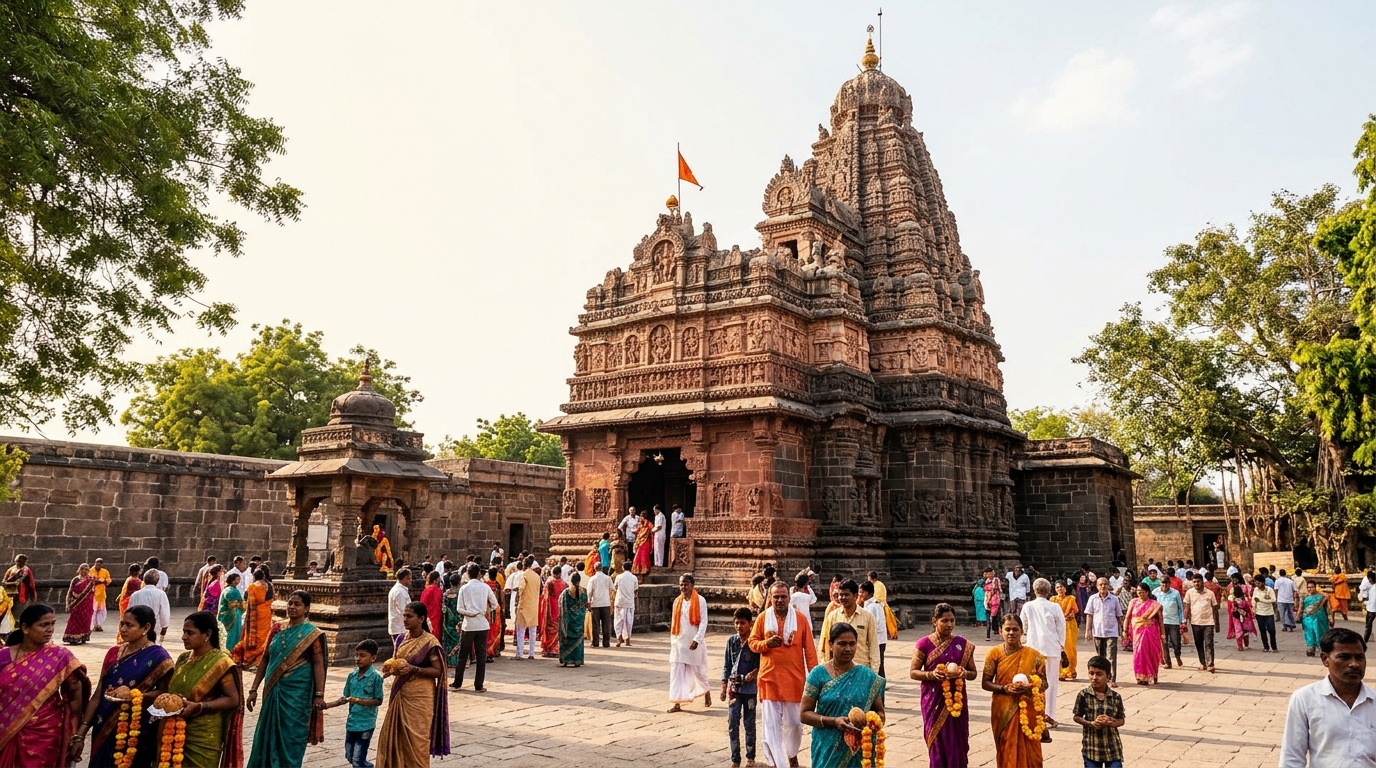
Visiting a sacred temple is sometimes more than a journey to a religious place; it is a quiet moment when the heart searches for peace, hope, and a little strength to face whatever life brings next.
Grishneshwar Jyotirlinga holds a special place in the hearts of Lord Shiva’s devotees, drawing pilgrims who wish to offer prayers, perform traditional rituals, and experience the spiritual atmosphere of an ancient Hindu shrine.
Located near the famous Ellora Caves in Maharashtra, India, this revered temple is traditionally recognized as the twelfth of the twelve sacred Jyotirlingas dedicated to Lord Shiva. For many devotees, standing before the holy Shiva Linga is an emotional experience, filled with faith and gratitude.
Some arrive with prayers for their families, while others simply come seeking a peaceful moment away from everyday worries.
Whether you are planning a pilgrimage, exploring the temple’s religious significance, or looking into Grishneshwar Temple Puja Booking, understanding its rituals, customs, and practical arrangements can help make your visit more meaningful.
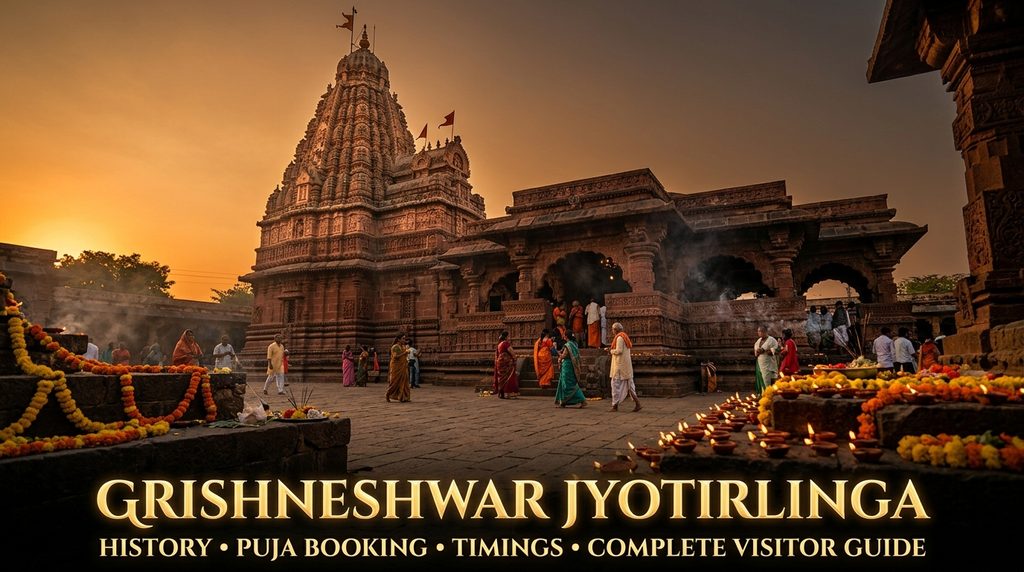
What Is Grishneshwar Jyotirlinga?
Grishneshwar Jyotirlinga Temple, also known as Grishneshwar Temple or Grishneshwar Shiva Temple, is one of India’s most important Shiva pilgrimage destinations. The temple is situated in Verul, near Ellora, in the Chhatrapati Sambhajinagar district of Maharashtra.
The word Jyotirlinga refers to a sacred manifestation of Lord Shiva, traditionally understood as a symbol of his infinite divine light. According to Hindu belief, the twelve Jyotirlingas are especially significant places for worshipping Shiva, and Grishneshwar is revered as the twelfth in this traditional list.
The temple attracts devotees throughout the year, especially on Mondays, during the holy Shravan Month, and on Maha Shivratri. For many visitors, the experience combines devotion, ancient traditions, and an opportunity to reflect on life’s deeper meaning.
History and Religious Significance of Grishneshwar Temple
The history of Grishneshwar Temple is closely connected with Hindu religious traditions and the long-standing worship of Lord Shiva in Maharashtra. The present temple structure is associated with traditional Maratha era patronage and restoration, including the work supported by Queen Ahilyabai Holkar in the eighteenth century.
Its architectural appearance reflects the regional temple building traditions of Maharashtra. The stone structure, sculptural details, and sacred interior create an atmosphere that feels deeply connected with centuries of religious practice.
Grishneshwar also has a special connection with the nearby Ellora Caves, a celebrated UNESCO World Heritage Site known for its remarkable Buddhist, Hindu, and Jain monuments. Although the temple and the caves are distinct religious and heritage sites, their proximity makes the area an important destination for spiritual and cultural tourism.
The Legend Behind Grishneshwar Jyotirlinga
According to a popular Hindu legend, a devoted woman named Ghushma worshipped Lord Shiva with unwavering faith. Despite experiencing suffering and difficult circumstances, she continued her daily worship and remained devoted to the divine.
Moved by her devotion, Lord Shiva is believed to have manifested at the sacred location. The story is traditionally associated with the origin of the Grishneshwar Jyotirlinga and highlights the power of faith, patience, and surrender.
Different retellings contain variations in the names and details of the characters. The central message, however, remains the same: sincere devotion can become a source of strength even during the hardest moments of life.
Grishneshwar Jyotirlinga Location and How to Reach

Planning your route before travelling can save time and help you enjoy the pilgrimage without unnecessary stress. The temple’s location near Ellora makes it relatively convenient to combine religious worship with a visit to the surrounding historical attractions.
The main location details are:
- Temple: Grishneshwar Jyotirlinga Temple
- Village: Verul, also known as Ellora
- District: Chhatrapati Sambhajinagar, Maharashtra
- Country: India
- Nearby attraction: Ellora Caves
By Road
The temple can be reached by road from Chhatrapati Sambhajinagar city. Visitors can use taxis, private vehicles, or local transport services, depending on availability. Travellers arriving during major festivals should allow extra time because roads around the temple may become busy.
By Train
Chhatrapati Sambhajinagar railway station is a practical rail access point for many pilgrims. From the station, visitors can continue towards Verul by taxi or other local transport.
By Air
Chhatrapati Sambhajinagar Airport is a nearby air travel option. After landing, travellers can arrange road transportation to reach the temple.
Before leaving, confirm current transport schedules and road conditions, particularly if you are visiting during Shravan Somvar or Maha Shivratri.
Grishneshwar Temple Timings and Darshan Planning
Temple timings can change according to the season, festival arrangements, and local management decisions. It is best to confirm the latest official schedule before travelling rather than relying entirely on an old online listing.
Visitors generally plan their darshan around the morning and evening worship periods. Arriving early can be helpful if you prefer a quieter atmosphere, although festival days may remain crowded from the beginning of the day.
Keep these practical points in mind:
- Confirm the current opening and closing times before departure.
- Check whether any special darshan or puja arrangements apply on your chosen date.
- Allow additional time during Mondays and the Shravan Month.
- Follow the instructions of temple staff and local authorities.
- Ask about current entry arrangements if you intend to perform a specific ritual.
A little preparation can make a significant difference, especially when travelling with elderly family members or young children.
Grishneshwar Temple Puja Booking: Online and Offline Options
Many devotees visit Grishneshwar Jyotirlinga to perform Shiva worship according to family traditions or to mark an important occasion. Depending on the ritual, visitors may need to enquire about available puja arrangements, the participation of a priest, the required offerings, and the applicable charges.
The process can differ depending on the ritual and the arrangements authorized by the temple. Therefore, devotees should verify the booking procedure directly with the temple administration or an officially recognized service provider.
Grishneshwar Jyotirlinga Online Puja Booking
Some devotees search for online services because they live far away or wish to arrange a ritual before travelling. Online services may provide information about puja options, priest arrangements, and the details needed for registration.
Before making a payment, verify the following:
- Whether the service is officially authorized or independently operated.
- Whether the selected ritual is actually available at the temple.
- The total price and what the payment includes.
- Whether a specific date and time can be confirmed.
- Whether a receipt or written confirmation will be provided.
Be careful with websites that promise guaranteed results, claim special access without proof, or advertise themselves as official without verifiable evidence.
Grishneshwar Temple Offline Puja Booking
Visitors who are already at the temple may enquire about rituals through the designated temple office or authorized booking counter, where available. This approach allows devotees to ask questions directly and clarify the procedure before making a commitment.
During busy religious periods, availability may be limited. It is sensible to enquire in advance if you plan to perform a particular puja rather than assuming that every ritual will be available immediately.
How to Book a Panditji at Grishneshwar Temple
If your family tradition requires a priest to conduct a ceremony, ask the temple administration about its approved process for arranging a Panditji.
You may be asked to provide details such as:
- Devotee’s name.
- Preferred puja date.
- Type of ritual.
- Number of participants.
- Gotra details, if required by the ceremony.
- Contact information for confirmation.
Only share personal information that is necessary for the booking. Also, confirm whether the priest’s dakshina, puja samagri, and any additional services are included in the quoted price.
Types of Puja at Grishneshwar Jyotirlinga
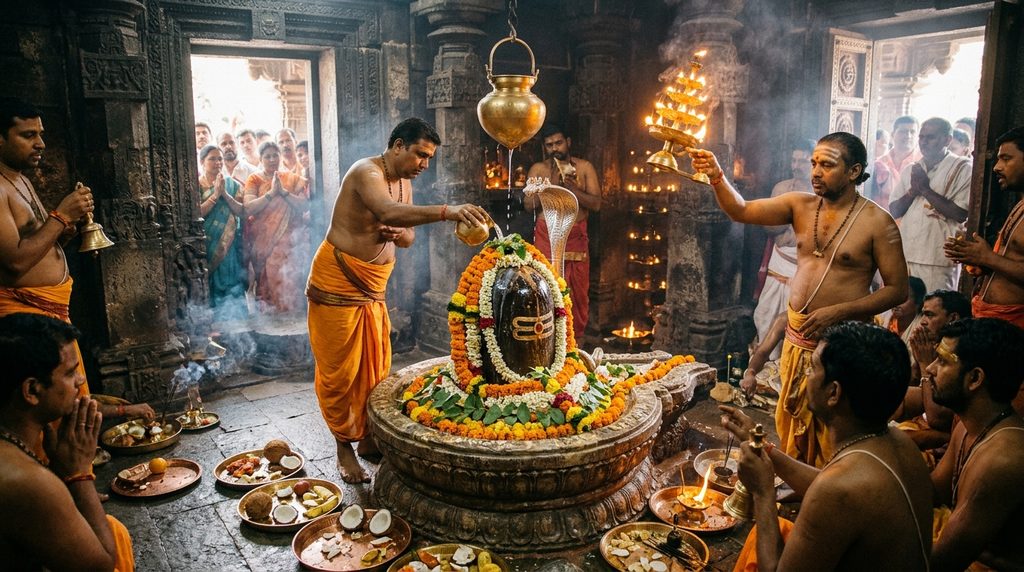
Shiva worship includes several traditional rituals, each with its own method and devotional significance. The exact ceremonies available at Grishneshwar Temple, however, should be confirmed locally.
Vedic Rudrabhishek Puja
Vedic Rudrabhishek Puja is a traditional form of worship dedicated to Lord Shiva. It generally involves the recitation of Vedic mantras and ritual offerings to the Shiva Linga.
Devotees may choose this ceremony while praying for peace, strength, family well-being, or spiritual progress. The precise procedure depends on the local tradition and the priest conducting the ritual.
Panchamrit Rudrabhishek Puja
Panchamrit Abhishek is associated with the use of five traditionally sacred ingredients: milk, curd, ghee, honey, and sugar. These offerings symbolize devotion and reverence within Hindu worship.
The ceremony may be performed on auspicious occasions or as part of a family’s regular religious observance. Visitors should confirm the temple’s permitted offerings and ritual arrangements before bringing any ingredients.
Jal Rudrabhishek Puja
Jalabhishek, or the offering of water to Lord Shiva, is one of the familiar practices in Shiva worship. Some devotees use water brought from a sacred source, such as Ganga Jal, when permitted by temple rules.
The act is often associated with simplicity, humility, and sincere prayer. Even a modest offering can carry deep personal meaning for someone who approaches worship with genuine faith.
Laghurudra Abhishek Puja
Laghurudra Abhishek is a more elaborate form of Rudra worship involving traditional mantra recitation and ritual observances. Families may arrange such ceremonies for religious occasions or personal milestones.
Its duration, priest requirements, and availability can vary. Ask for clear details before booking so that the ceremony matches your expectations and budget.
Maharudra Abhishek Puja
Maharudra Abhishek is a substantial ritual form associated with extensive Rudra mantra recitation and worship. It may involve multiple priests and a more detailed ceremonial arrangement than a simple offering.
Devotees sometimes undertake this ritual as a major spiritual observance. However, it should not be assumed that the ceremony is routinely offered at every temple or on every date.
Mahamrityunjaya Jaap
Mahamrityunjaya Jaap involves the repeated chanting of the Mahamrityunjaya Mantra, a revered prayer associated with Lord Shiva. Devotees traditionally recite this mantra while praying for strength, peace, well being, and spiritual resilience.
Some services advertise a fixed number of repetitions or special arrangements. Confirm the actual ritual details with the priest or service provider before booking.
Grishneshwar Puja Timings and Ritual Duration
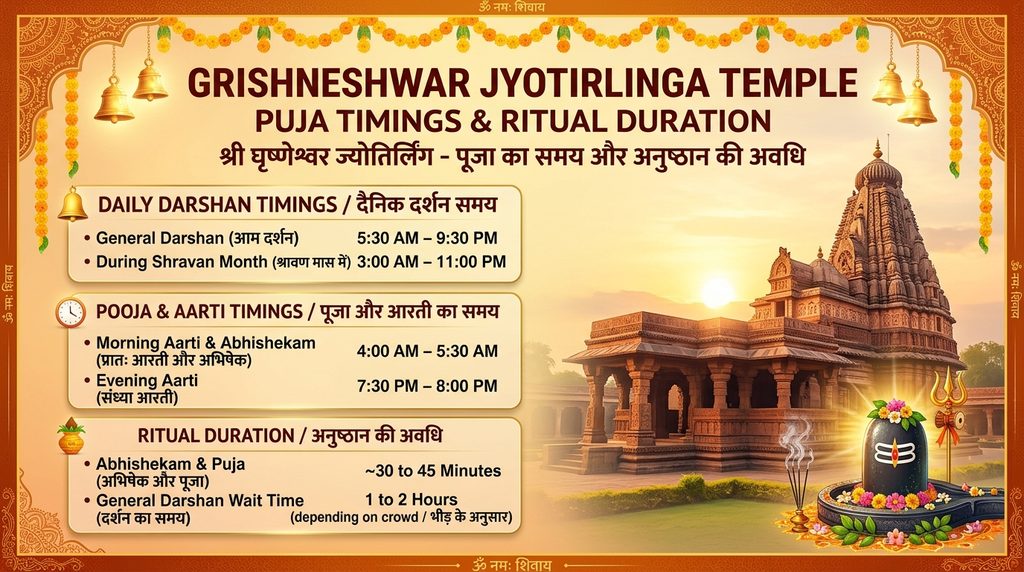
The time needed for a ritual depends on its type, the number of participants, the priest’s procedure, and the temple’s schedule. A simple water offering may take considerably less time than an elaborate Vedic ceremony.
When planning your visit, ask these questions:
- At what time does the ritual begin?
- How long is the expected duration?
- Must you arrive before the scheduled time?
- Are offerings provided, or must you bring them?
- Is the ritual conducted individually or as part of a group?
- Can the schedule change during festivals?
For Grishneshwar Rudrabhishek puja timings, rely on current confirmation rather than assuming that the same schedule applies throughout the year.
During the Shravan Month, Mondays, and Maha Shivratri, the number of devotees may increase substantially. Booking enquiries and travel arrangements made ahead of time can help prevent avoidable confusion.
Grishneshwar Temple Puja Cost and Dakshina
One of the common questions among pilgrims concerns the cost of performing puja at the temple. There is no single price that can safely be applied to every ritual, because charges may depend on the ceremony, the arrangements, and the service provider.
Before confirming a booking, request a clear breakdown of any fees.
| Cost component | What to confirm |
|---|---|
| Puja charges | The amount for the selected ritual |
| Priest’s dakshina | Whether it is included or separate |
| Puja samagri | Whether ritual ingredients are provided |
| Special arrangements | Whether any additional fees apply |
| Booking payment | Deposit, balance, and refund conditions |
| Receipt | Whether written payment confirmation is available |
If a provider advertises a very low price but later demands unexpected payments, pause and verify the details.
For accurate Grishneshwar Temple puja charges, check with the temple administration or the authorized provider responsible for the specific ceremony.
Garbhagriha, Sabha Mandap, and Temple Worship Rules
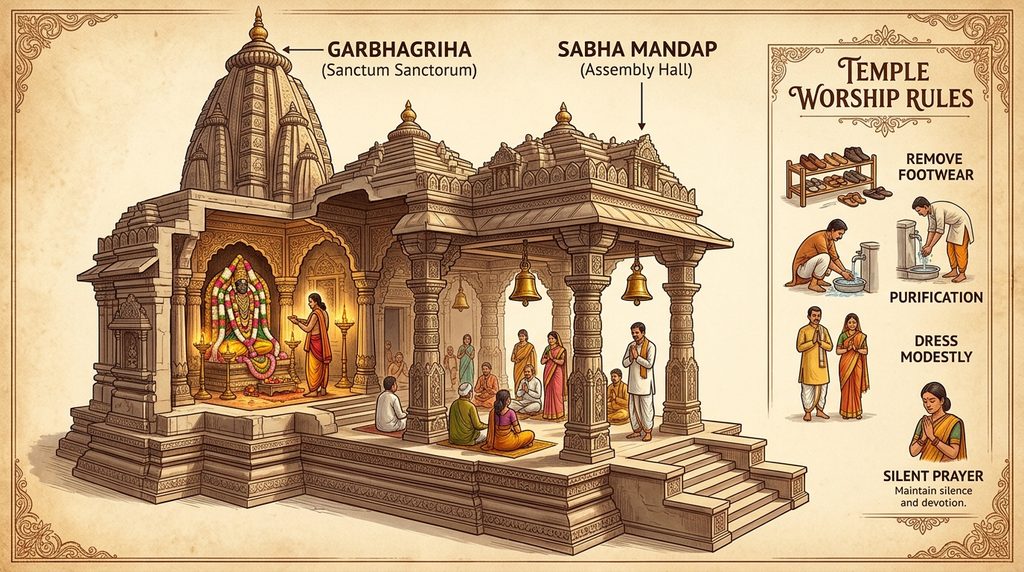
The Garbhagriha is the innermost sanctum of a Hindu temple, where the principal deity is enshrined. At Grishneshwar, this sacred area is central to the experience of Shiva worship.
The Sabha Mandap, or assembly hall, serves as an important architectural and devotional space in traditional temple design. Visitors should follow the local instructions about where they may stand, pray, and participate in ceremonies.
Temple rules are intended to preserve the sanctity of the shrine and help worshippers move safely through the premises.
Keep the following practices in mind:
- Dress respectfully and comfortably.
- Follow the current footwear policy.
- Avoid pushing or rushing in crowded areas.
- Ask before bringing ritual items into restricted spaces.
- Observe instructions about photography and mobile phones.
- Follow the directions of temple staff and priests.
- Treat other devotees with patience and consideration.
Rules concerning entry into the sanctum, touching the Shiva Linga, and participating in Abhishek may change according to current temple arrangements. Do not assume that every visitor is permitted to perform every ritual personally.
Shravan Somvar and Maha Shivratri at Grishneshwar
Certain days carry particular importance for devotees of Lord Shiva. At Grishneshwar Temple, Shravan Somvar, the Mondays of the holy Shravan Month, can be especially significant.
Many devotees observe fasting, chant Shiva mantras, offer water or Bilva leaves where permitted, and visit Shiva temples to seek blessings. For some families, this practice is an annual tradition passed down through generations.
Maha Shivratri is another major occasion associated with Lord Shiva. Devotees may participate in prayers, night time worship, fasting, and special religious observances according to local arrangements.
These occasions can attract large crowds, so allow extra time for travel and darshan. If you wish to perform Rudrabhishek or another specific ceremony, confirm its availability rather than assuming that a special festival automatically guarantees a booking.
Benefits of Shiva Puja According to Hindu Belief
For many devotees, worship at Grishneshwar is a deeply personal experience. It is not only about completing a ritual; it can also be a moment to slow down, reflect on personal choices, and reconnect with the values that matter most.
Within Hindu devotional traditions, Shiva worship is associated with several spiritual aspirations.
Peace and prosperity: Devotees may pray for stability, contentment, and a more harmonious home.
Family well-being: Families often offer prayers for their loved ones, hoping for strength and togetherness through life’s changing circumstances.
Spiritual growth: Mantra chanting and devotional rituals can encourage reflection, discipline, and a stronger connection with one’s faith.
Overcoming difficulties: Many worshippers turn to Lord Shiva during uncertain times, seeking courage and the ability to face challenges with patience.
Inner purification: Rituals such as Rudrabhishek can symbolize letting go of negative habits and renewing one’s commitment to a more thoughtful life.
These are religious and personal meanings rather than guaranteed material or medical outcomes. The value of worship often lies in the comfort, reflection, and devotion that people find in the experience.
What to Carry for Your Grishneshwar Temple Visit

Packing thoughtfully can make your pilgrimage easier, especially if you intend to visit the Ellora Caves on the same day.
Consider carrying:
- Comfortable, modest clothing.
- A small amount of cash for permitted expenses.
- Drinking water for use outside restricted worship areas.
- Essential medicines and personal necessities.
- Identification and travel booking details.
- A phone with sufficient battery for travel arrangements.
- Any ritual items specifically permitted by the temple.
Avoid bringing unnecessary valuables or large bags. Before purchasing flowers, Bilva leaves, milk, or other puja samagri, check whether those offerings are accepted and whether the temple has specific arrangements for obtaining them.
If you are travelling with children or older relatives, plan for rest breaks and possible waiting times. A pilgrimage should leave room for devotion, not become a race against the clock.
Frequently Asked Questions About Grishneshwar Jyotirlinga
Where is Grishneshwar Jyotirlinga located?
Grishneshwar Jyotirlinga Temple is located in Verul, near the Ellora Caves, in Maharashtra, India. Chhatrapati Sambhajinagar is a practical transport hub for many visitors.
Is Grishneshwar one of the twelve Jyotirlingas?
Yes. Grishneshwar is traditionally recognized as the twelfth of the twelve sacred Jyotirlingas associated with Lord Shiva in Hindu tradition.
How can I book puja at Grishneshwar Temple?
Contact the temple administration or a verifiably authorized service provider to ask about available rituals, booking procedures, dates, and charges. Verify the provider before paying online.
What is the cost of Rudrabhishek at Grishneshwar Temple?
The cost depends on the specific ritual and its arrangements. Ask the responsible temple office or authorized provider for current charges, including any separate priest’s dakshina or puja samagri expenses.
Can I perform Jalabhishek at Grishneshwar Jyotirlinga?
Jalabhishek is a traditional form of Shiva worship, but the exact procedure and whether visitors can perform it personally depend on the temple’s current rules. Confirm the permitted arrangements before your visit.
Which month is especially important for Shiva worship?
The Shravan Month is particularly important to many Shiva devotees. Shravan Somvar and Maha Shivratri are also significant occasions for prayer and religious observance.
Can I visit Ellora Caves and Grishneshwar Temple on the same day?
Yes, many travellers combine the two destinations because they are located close to one another. Check the current opening hours of both sites and allow enough time for temple darshan, travel, and exploring the caves.
Is advance puja booking necessary?
Advance booking may be helpful for particular ceremonies, especially during busy periods. Whether it is mandatory depends on the ritual and the temple’s current arrangements, so confirm directly before travelling.
How to Plan a Meaningful Grishneshwar Jyotirlinga Pilgrimage
A rewarding pilgrimage begins with a simple idea: prepare the practical details so your attention can remain on the spiritual experience.
Start by confirming temple timings, arranging transport, and checking the current rules for darshan. If you intend to book a ritual, ask about the procedure, charges, priest arrangements, and required offerings before making payment.
It is equally important to approach the visit with patience. Crowds, queues, and schedule changes are sometimes unavoidable at sacred destinations, especially on important religious days. Respecting other devotees and following temple instructions helps preserve a peaceful environment for everyone.
You do not need an elaborate ceremony to make your visit meaningful. For some people, a carefully arranged Rudrabhishek offers a special devotional experience; for others, a quiet prayer before the Shiva Linga is enough to make the journey memorable.
read more https://gavorexium.com/swaminarayan-akshardham-new-delhi/
Conclusion
Grishneshwar Jyotirlinga is much more than a destination on a pilgrimage map. For countless devotees, it represents faith, perseverance, and the enduring spiritual significance of Lord Shiva.
Its ancient traditions, sacred atmosphere, and location near the remarkable Ellora Caves make it an important place to explore for both religious and cultural reasons.
Whether you are planning darshan, researching the history of the temple, or enquiring about Grishneshwar Temple Puja Booking, take time to verify the details and choose arrangements that suit your needs. A little preparation, a respectful attitude, and sincere devotion can turn an ordinary visit into a meaningful experience.
May your journey bring peace to your heart, strength to your family, and a renewed appreciation for the traditions that inspire you. Har Har Mahadev!