


High above the beautiful hills of Shimla, where cool mountain winds travel through tall deodar trees and clouds sometimes appear close enough to touch, stands a sacred place filled with devotion and ancient stories.
Jakhu Temple is not just another religious destination; it is a place where faith, mythology, nature and the peaceful beauty of the Himalayas come together in a rather unforgettable way.
Located on Jakhu Hill, the highest peak of Shimla, this famous temple is dedicated to Lord Hanuman.
Thousands of devotees and tourists visit every year to seek blessings, admire the enormous Hanuman statue and enjoy breathtaking views of the surrounding mountains.
Some visitors arrive with prayers in their hearts, while others come to experience the beauty of the hilltop. Interestingly, many leave with both memories.
Also known as Jakhoo Temple and Jakhu Hanuman Temple, this ancient shrine has a special connection with the Ramayana.
Its religious significance, traditional architecture, interesting legends and famous 108 foot Hanuman idol make it one of the most popular attractions in Himachal Pradesh.
If you are planning a visit, this complete guide explains the temple’s history, location, timings, ropeway, religious importance, transportation options and useful travel tips.
Jakhu Temple Shimla: An Overview

Jakhu Temple Shimla is among the most recognised Hindu pilgrimage destinations in the beautiful hill city of Shimla, Himachal Pradesh.
Dedicated to Lord Hanuman, the temple sits on a forested mountain surrounded by beautiful natural scenery.
The peaceful environment makes it an appealing destination for both religious visitors and people interested in exploring Shimla’s cultural heritage.
Its giant Hanuman statue can be spotted from several parts of the city, making it one of the most recognisable landmarks in the region.
Here are some important details about the temple:
| Particulars | Details |
|---|---|
| Temple name | Jakhu Temple |
| Alternative name | Jakhoo Temple |
| Main deity | Lord Hanuman |
| Location | Jakhu Hill, Shimla |
| State | Himachal Pradesh |
| Country | India |
| Temple elevation | Approximately 2,455 to 2,467 metres |
| Famous attraction | 108 feet Hanuman statue |
| Architecture | Traditional hill style architecture |
| Major festival | Dussehra |
| Ropeway | Jakhu Ropeway |
| Access options | Walking, taxi, horse ride and ropeway |
| Religious connection | Ramayana |
The temple is particularly popular among families, pilgrims, photographers and travellers exploring the famous sightseeing places of Shimla.
Jakhu Temple History: The Ancient Story Behind the Shrine
The Jakhu Temple history is closely connected with the Hindu epic Ramayana and the legendary journey of Lord Hanuman.
According to popular religious belief, during the battle between Lord Rama and Ravana, Lakshmana was seriously injured.
To save his life, Lord Hanuman was asked to bring Sanjeevani Booti, a powerful medicinal herb believed to restore consciousness.
While travelling towards the Himalayas in search of the life saving herb, Hanuman Ji is believed to have stopped at Jakhu Hill.
The hill is traditionally associated with a sage named Yaksha Rishi, who was living there and performing meditation. According to the local legend, Hanuman met the sage during his journey and rested at the hill.
The Connection with Yaksha Rishi
Local traditions suggest that Yaksha Rishi requested Hanuman Ji to stay at the hill for some time. Hanuman promised to return after completing his mission.
However, the search for Sanjeevani took longer than expected, and Hanuman did not return as originally anticipated. According to the legend, the sage established a shrine in his honour.
This traditional story is considered one of the important explanations for the temple’s religious significance.
Why Is Jakhu Hill Associated with Lord Hanuman?

The connection comes from Hanuman’s legendary journey through the Himalayan region.
Devotees believe that the hill preserves the memory of his visit, making it a sacred location for worshippers.
Over generations, the shrine became an important destination for people seeking blessings from Bajrangbali.
Although the story belongs to religious tradition rather than documented historical evidence, it remains an essential part of the local spiritual identity.
Jakhu Hanuman Temple and Its Religious Significance
The Jakhu Hanuman Temple holds an important place among the religious attractions of Himachal Pradesh.
Lord Hanuman is worshipped here as a symbol of courage, strength, loyalty, wisdom and devotion.
For many devotees, visiting the temple is not simply about offering prayers. It is also an opportunity to reflect on the qualities associated with Hanuman Ji.
People often pray for:
- Strength and courage during difficult situations.
- Protection from negative influences and fears.
- Success in personal and professional life.
- Peace, confidence and emotional strength.
- Good health and happiness for family members.
- Wisdom to make better decisions.
- Blessings for children and loved ones.
The temple attracts devotees throughout the year, especially on Tuesdays and Saturdays, which are traditionally considered important days for Hanuman worship.
The atmosphere becomes particularly devotional during Hanuman Jayanti and other religious celebrations.
108 Feet Hanuman Statue at Jakhu Temple

Jakhu Temple: A Must Visit Destination for Any Visitor to Shimla | AlightIndia
One of the biggest attractions of Jakhu Temple Shimla is its magnificent 108 foot Hanuman statue.
Standing prominently on the hilltop, the enormous idol has become a recognisable symbol of Shimla. Its impressive size and striking appearance attract visitors even from distant parts of the city.
The statue represents Lord Hanuman in a devotional form and creates a powerful visual experience for visitors approaching the temple.
When Was the Hanuman Statue Unveiled?
The famous Hanuman statue was unveiled on 4 November 2010.
The unveiling ceremony was attended by Abhishek Bachchan, who was invited as the special guest for the occasion.
The construction reportedly involved an expenditure of approximately Rs 1.5 crore, making the project a significant addition to the temple complex.
Why Is the Statue So Famous?
There are several reasons why this enormous idol attracts so much attention.
- Its impressive 108 foot height makes it visible from various parts of Shimla.
- Its location on the mountain creates a dramatic backdrop.
- It represents the devotion and strength associated with Lord Hanuman.
- It has become an important landmark for Shimla sightseeing.
- It attracts religious pilgrims as well as photography enthusiasts.
For many travellers, seeing the giant Hanuman idol for the first time is one of the most memorable moments of their Shimla trip.
Jakhu Temple Architecture and Traditional Design
The Jakhu Temple architecture reflects the traditional building styles found in the Himalayan region.
Unlike some enormous stone temples found elsewhere in India, this hilltop shrine has a more traditional mountain character.
Its surroundings, wooden elements and sloping roof design complement the natural landscape.
Kath Kuni Architecture
Kath Kuni is a traditional construction technique associated with parts of Himachal Pradesh.
It generally involves alternating layers of wood and stone, creating strong structures suitable for mountain conditions.
This architectural approach has historically been used in homes, temples and other traditional buildings across the Himalayan region.
The style is valued for its practical qualities as well as its visual appeal.
Natural Surroundings of the Temple
The temple premises are surrounded by tall trees, mountain vegetation and scenic viewpoints.
Visitors can enjoy:
- Traditional temple surroundings.
- Beautiful views of Shimla.
- Fresh mountain air.
- Forested walking paths.
- Peaceful spaces for prayer and reflection.
The combination of traditional architecture and natural beauty gives the shrine a distinctive character.
Jakhu Temple Timings and Opening Hours
If you are planning a religious visit, checking the temple schedule before travelling is a sensible idea.
Jakhu Temple timings may vary depending on the season, weather conditions and religious occasions.
Visitors should confirm the latest opening and closing hours locally before starting their journey.
| Visiting information | Details |
|---|---|
| Opening hours | Confirm locally before visiting |
| Closing hours | May vary by season |
| Morning visit | Suitable for peaceful darshan |
| Afternoon visit | Suitable for sightseeing |
| Evening visit | Enjoy the hilltop atmosphere |
| Festival days | May have special arrangements |
Early morning is generally a pleasant time to visit because the surroundings are quieter and the weather is often comfortable.
During weekends and holidays, the number of visitors can increase, so arriving earlier may make the experience more relaxed.
How Much Time Is Required to Visit Jakhu Temple?
Most visitors should allow approximately 1 to 2 hours for exploring the temple and its surroundings.
However, the total time depends on how you travel, how long you spend offering prayers and whether you want to enjoy the viewpoints.
If you are walking uphill, you should allow additional time for the climb.
Jakhu Temple Entry Fee and Ticket Information

A common question among travellers is whether they need to purchase a ticket to enter the temple.
The temple is generally visited as a religious shrine without a regular entry ticket for darshan.
However, visitors should check locally for any special arrangements or changes.
It is important to understand that the ropeway operates separately from temple entry.
Jakhu Temple entry fee and ropeway charges are not the same thing. If you choose the cable car, you will need to purchase a separate ropeway ticket.
For the latest Jakhu Temple ticket price and other visitor information, check the relevant local authorities or ticket counter before travelling.
Jakhu Ropeway: A Beautiful Way to Reach the Temple
The Jakhu Ropeway is one of the most convenient and enjoyable ways to reach the hilltop shrine.
Opened in 2017, this aerial transportation facility connects the area near The Ridge with Jakhu Hill.
It offers visitors a comfortable alternative to walking along the steep mountain route. The journey also provides beautiful views of Shimla’s hills, forests and surrounding buildings.
What Makes the Jakhu Ropeway Special?
The ropeway is more than just a transportation facility. For many tourists, the journey itself becomes an attraction.
During the ride, passengers can enjoy:
- Panoramic views of Shimla.
- Beautiful mountain scenery.
- Aerial views of forest covered slopes.
- A convenient journey towards the temple.
- Opportunities for scenic photography.
The project is associated with Jagson International Limited, which developed the ropeway facility.
Jakhu Temple Ropeway Ticket Price
The Jakhu Temple ropeway ticket price can change depending on operating policies and ticket categories.
Visitors should confirm the current fare directly at the ropeway station before purchasing tickets.
Do not assume that an old online fare is still valid, especially when planning a family trip.
Jakhu Temple Ropeway Timings
Ropeway operating hours may change because of weather, maintenance and seasonal conditions.
Strong winds, heavy rainfall or other unsuitable weather conditions may affect services.
It is therefore better to confirm the latest Jakhu Temple ropeway timings before visiting.
Jakhu Temple Location: Where Is the Temple Situated?

The Jakhu Temple location is Jakhu Hill in Shimla, the capital city of Himachal Pradesh, India.
The temple stands at an elevation commonly reported between 2,455 and 2,467 metres above sea level, depending on the source.
Jakhu Hill is considered the highest peak within Shimla city and offers wonderful views of the surrounding Himalayan landscape.
Its elevated location makes the shrine particularly attractive to visitors who enjoy mountain scenery.
Distance from The Ridge Shimla
The temple is approximately 2.5 km from The Ridge, although the actual walking distance and travel time depend on the route.
The Ridge is one of Shimla’s most famous public spaces, making it a convenient starting point for visitors.
Distance from Mall Road
Jakhu Temple is also accessible from Mall Road through connecting walking routes and local transportation.
The journey involves an uphill climb, so visitors should consider their fitness and available time before choosing to walk.
How to Reach Jakhu Temple Shimla

There are several ways to reach the temple, depending on your budget, physical comfort and travel preferences.
Whether you prefer a scenic cable car journey or a traditional mountain walk, reaching this famous shrine is relatively convenient.
Jakhu Temple by Ropeway
The ropeway is one of the easiest options for reaching the temple.
Visitors can travel from the lower station near The Ridge towards Jakhu Hill while enjoying beautiful aerial views.
It is particularly useful for families, older visitors and tourists who prefer to avoid a steep uphill walk.
Jakhu Temple by Taxi
Local taxis are another convenient option.
You can hire a taxi from different parts of Shimla and travel towards the accessible road area near the temple.
However, road access may be restricted in certain sections, depending on local traffic and visitor arrangements.
Jakhu Temple Walking Route
Walking is a popular choice for visitors who enjoy nature and outdoor activities.
The route passes through forested surroundings and offers glimpses of Shimla’s beautiful mountain environment.
The uphill journey can be tiring, especially for people who are not accustomed to walking on steep paths.
Comfortable shoes and sufficient drinking water are recommended.
Jakhu Temple Horse Ride
Horse rides may also be available in the area, depending on local arrangements and operating conditions.
This option can be useful for visitors who find the uphill journey difficult.
However, availability and charges should be confirmed locally.
Jakhu Temple Distance from Ridge and Mall Road
Understanding the distance from important landmarks can help you plan your Shimla sightseeing schedule.
| Starting point | Approximate information |
|---|---|
| The Ridge | Around 2.5 km |
| Mall Road | Accessible through uphill routes |
| Jakhu Ropeway lower station | Near The Ridge area |
| Jakhu Hill | Temple’s location |
Remember that road distance, walking distance and ropeway travel are different. The actual journey time will depend on your selected transportation method.
Jakhu Temple Dussehra Festival and Celebrations
Dussehra is one of the important religious occasions associated with Lord Rama and Lord Hanuman.
At Jakhu Temple, the festival carries special significance because of the shrine’s traditional connection with the Ramayana.
Dussehra celebrates the victory of good over evil and commemorates Lord Rama’s victory over Ravana.
During this period, devotees visit the temple to offer prayers and seek blessings.
Religious Importance of Dussehra
The festival reminds devotees of the values represented by Lord Rama and Hanuman Ji, including truth, loyalty, courage and righteousness.
Hanuman is particularly respected for his unwavering devotion to Lord Rama.
For this reason, the shrine becomes an important destination for devotees during the festive period.
Annadale and the Historical Connection
Annadale is another location associated with Shimla’s Dussehra traditions.
Historical accounts connect the area with earlier Dussehra celebrations before the festivities became associated with other locations.
The festival is an opportunity to experience the religious and cultural traditions of Shimla.
Visitors planning to attend should check local arrangements because crowd management and access conditions can change during major celebrations.
Monkeys at Jakhu Temple: Important Visitor Precautions
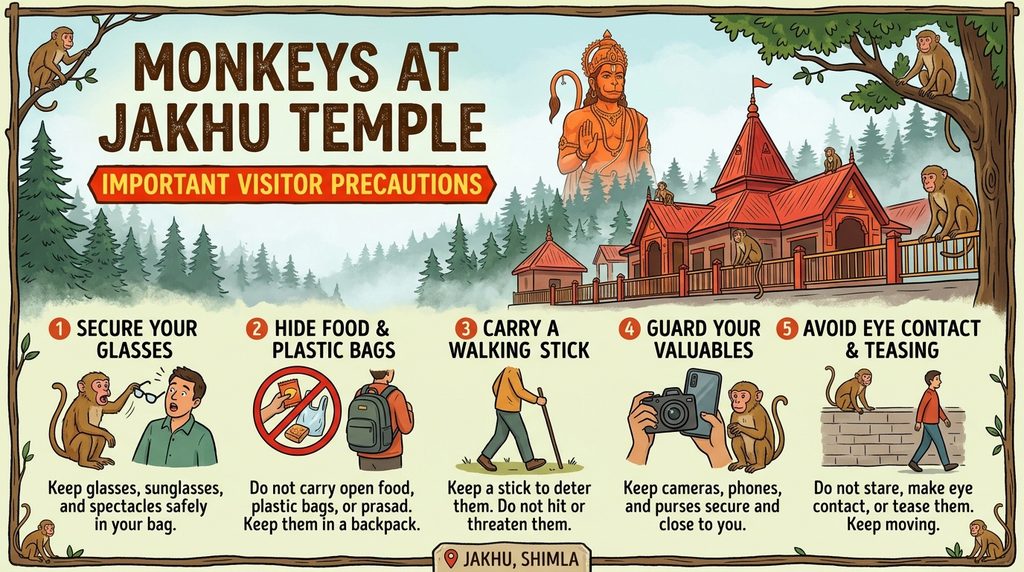
One interesting feature of Jakhu Temple is the presence of monkeys around the temple premises.
These animals are commonly seen around the walking paths, trees and areas near the shrine.
For some visitors, watching the monkeys is an amusing part of the experience. But it is important to remember that they are wild animals and should be treated carefully.
How to Stay Safe Around Monkeys
Keep these practical precautions in mind:
- Avoid carrying food openly in your hands.
- Do not try to feed or touch the monkeys.
- Keep sunglasses and mobile phones secure.
- Avoid carrying loose plastic bags.
- Do not tease or chase the animals.
- Keep children close to adults.
- Never attempt to take food back from a monkey.
A little caution can prevent unnecessary trouble and make your visit more enjoyable.
Best Time to Visit Jakhu Temple Shimla
Shimla has a pleasant mountain climate, although temperatures and weather conditions change throughout the year.
The best time to visit depends on whether you prefer comfortable sightseeing, winter scenery or religious celebrations.
Summer Season
Summer is generally a popular period for exploring Shimla.
The weather is comparatively pleasant, making it easier to walk uphill and enjoy the surroundings.
It is also a busy tourist season, so visitors should expect more people around popular attractions.
Monsoon Season
During the monsoon, the hills become greener and the natural scenery looks beautiful.
However, rainfall can make walking paths slippery. Fog and poor visibility may also affect ropeway operations.
Visitors should check the weather forecast before travelling.
Winter Season
Winter gives Shimla a different atmosphere.
The surrounding hills may experience snowfall, depending on the weather conditions. The temple and its surroundings can look especially beautiful during this season.
However, cold temperatures and slippery paths require additional care.
Best Time of Day
Morning is generally a good choice for people who prefer peaceful surroundings and comfortable sightseeing.
Afternoon visits can also be enjoyable, particularly when visibility is good.
For photography, clear weather offers the best opportunity to appreciate the mountain views.
What Is Special About Jakhu Temple?
There are several reasons why this shrine stands out among the famous temples in Himachal Pradesh.
It combines religious importance with a distinctive natural setting, creating an experience that feels different from visiting a temple in a busy city.
Some of its most special features include:
- Religious connection: Its traditional association with Lord Hanuman and the Ramayana.
- 108 foot statue: The enormous Hanuman idol is one of Shimla’s major landmarks.
- Mountain location: The temple stands on Shimla’s highest peak.
- Traditional architecture: The shrine reflects the architectural character of the Himalayan region.
- Ropeway facility: Visitors can enjoy an aerial journey to the hilltop.
- Natural beauty: The surrounding forests and mountain views create a peaceful atmosphere.
- Dussehra celebrations: The temple has an important connection with the festival’s religious traditions.
These features make the shrine an important part of Shimla’s religious and tourism identity.
Important Travel Tips for Visiting Jakhu Temple
A little preparation can make your visit much more comfortable, especially if you are travelling with children or older family members.
Here are some useful suggestions:
- Wear comfortable walking shoes if you plan to climb the hill.
- Carry a light jacket because mountain weather can change quickly.
- Keep drinking water with you.
- Avoid carrying food openly because monkeys are present.
- Check ropeway availability before starting your journey.
- Confirm temple timings during festivals and public holidays.
- Respect the religious atmosphere and follow temple instructions.
- Keep your belongings secure.
- Avoid walking on slippery paths during rainy or snowy weather.
- Allow extra time if you plan to explore the surrounding viewpoints.
If you are visiting Shimla for the first time, combining Jakhu Temple with The Ridge and Mall Road can make a pleasant sightseeing day.
Frequently Asked Questions About Jakhu Temple
1. Where is Jakhu Temple located in Shimla?
Jakhu Temple is situated on Jakhu Hill in Shimla, Himachal Pradesh. It is located approximately 2.5 km from The Ridge.
2. What is Jakhu Temple famous for?
The temple is famous for its connection with Lord Hanuman, its ancient religious traditions and the impressive 108-foot Hanuman statue.
3. What is the height of the Hanuman statue at Jakhu Temple?
The famous Hanuman statue at Jakhu Temple is 108 feet tall and was unveiled on 4 November 2010.
4. What are the Jakhu Temple timings?
Temple opening and closing hours may vary depending on the season and local arrangements. Visitors should confirm the latest schedule before travelling.
5. Is there a ropeway to Jakhu Temple?
Yes, the Jakhu Ropeway connects the area near The Ridge with Jakhu Hill. It provides a convenient way to reach the temple.
6. How far is Jakhu Temple from Mall Road?
The temple is accessible from Mall Road through uphill walking routes and local transportation. The exact distance depends on the starting point and route.
7. Can visitors reach Jakhu Temple by walking?
Yes, visitors can walk to the temple through uphill paths surrounded by trees and beautiful mountain scenery.
8. Why is Jakhu Temple associated with Lord Hanuman?
According to the traditional Ramayana legend, Lord Hanuman stopped at Jakhu Hill during his search for Sanjeevani Booti to save Lakshmana.
9. Are monkeys found at Jakhu Temple?
Yes, monkeys are commonly seen around the temple premises. Visitors should avoid feeding or disturbing them and keep personal belongings secure.
10. When is Dussehra celebrated at Jakhu Temple?
Dussehra is celebrated according to the Hindu calendar, generally in September or October. The festival commemorates the victory of Lord Rama over Ravana.
11. How much time is required to visit Jakhu Temple?
Around 1–2 hours is a reasonable estimate for exploring the shrine and its surroundings. Additional time may be needed for walking or ropeway travel.
12. What is the elevation of Jakhu Temple?
The temple is situated approximately 2,455 to 2,467 metres above sea level on Jakhu Hill.
read more;https://gavorexium.com/kashi-vishwanath-temple-varanasi-timings-2026/
Conclusion: Experience the Divine Beauty of Jakhu Temple
Jakhu Temple Shimla is a beautiful combination of faith, mythology, traditional architecture and Himalayan scenery.
Its connection with Lord Hanuman gives the shrine deep religious importance, while the enormous 108 foot statue makes it a remarkable landmark in the city.
From the peaceful temple surroundings and traditional legends to the exciting ropeway journey and beautiful mountain views, there is something memorable for almost every visitor.
Whether you are travelling to seek Hanuman Ji’s blessings, exploring the ancient temples of Himachal Pradesh or simply discovering Shimla’s famous attractions, a visit to this hilltop shrine deserves a place in your travel plans.
Take a moment to enjoy the surroundings, offer your prayers and appreciate the peaceful beauty of the mountains.
After all, some journeys are remembered not just for the places we visit, but for the feelings we carry home.
Jai Bajrangbali! May Lord Hanuman bless everyone with strength, happiness, courage and peace.