
In Hindu tradition, prayers are often more than words spoken before a deity.
They are a beautiful way of expressing faith, finding courage during difficult moments, and keeping the mind connected with something divine.
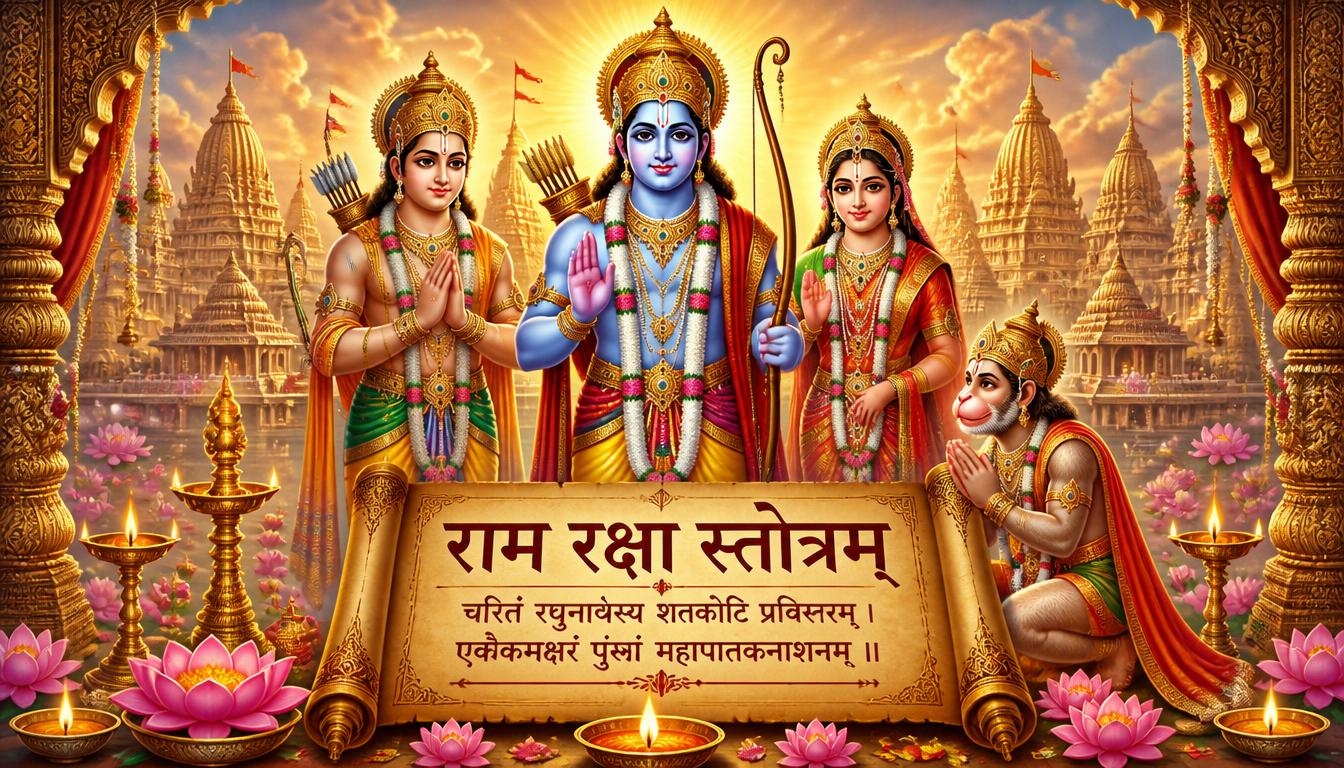
Among the many sacred prayers dedicated to Lord Rama, Rama Raksha Stotram holds a particularly special place.
Its verses carry the feeling of protection, devotion, and trust in the compassionate power of Sri Ramachandra.
Imagine beginning your morning with the name of Lord Rama on your lips.
The day may bring unexpected challenges, responsibilities, and worries, but a few moments of sincere prayer can make the heart feel lighter.
This is one reason devotees have continued reciting this traditional Sanskrit hymn for generations.
The Sri Rama Raksha Stotram is widely regarded as a protective devotional prayer. It describes the divine qualities of Lord Rama and seeks his blessings for different parts of the body, mind, and spiritual life.
Whether someone wants to understand its Sanskrit verses, read the Rama Raksha Stotram in English, or learn about its spiritual significance, this guide covers the important details.
What Is Rama Raksha Stotram?
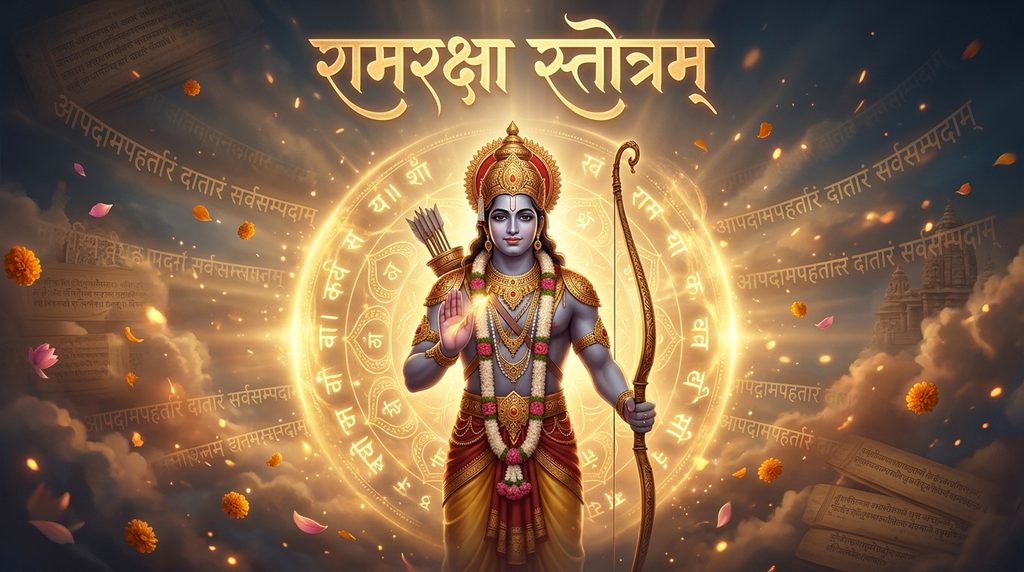
Rama Raksha Stotram is a traditional Hindu devotional hymn dedicated to Lord Rama, the seventh avatar of Lord Vishnu.
The Sanskrit word Raksha means protection, while Stotram refers to a hymn of praise offered to a deity.
Together, the name represents a prayer seeking the divine protection of Lord Rama.
The hymn praises Rama through several sacred names, including Ramachandra, Raghava, Ramabhadra, and Raghunatha.
Each name reflects a different quality of the deity, such as courage, compassion, righteousness, and divine strength.
One distinctive feature of this prayer is its protective description of Lord Rama’s presence throughout the devotee’s body.
Different names and forms of Rama are invoked to guard different body parts.
For many devotees, reciting this hymn is not simply a religious routine. It becomes a peaceful daily habit that encourages faith, discipline, and positive thinking.
History and Origin of Sri Rama Raksha Stotram
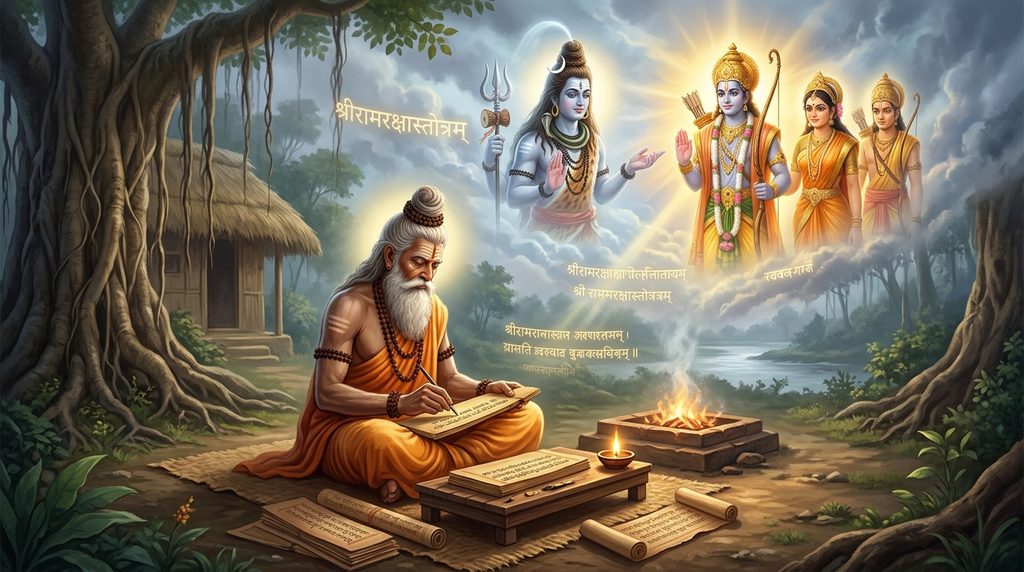
The traditional account of Sri Rama Raksha Stotram connects its composition with Budha Kaushika Rishi, a revered sage in Hindu tradition.
According to the commonly shared devotional legend, Lord Shiva appeared in the sage’s dream and revealed the sacred hymn.
Budha Kaushika Rishi then composed or recorded the prayer in Sanskrit, preserving its verses for devotees.
This traditional account gives the hymn a special spiritual importance.
Lord Shiva is considered one of the greatest devotees of Lord Rama, and his association with this prayer strengthens its place in Hindu devotional culture.
The Stotram is dedicated to Sri Ramachandra, who represents the highest ideals of Dharma, truth, compassion, and responsibility.
Who Composed Rama Raksha Stotram?
Budha Kaushika Rishi is traditionally credited as the composer of Rama Raksha Stotram.
The hymn begins with an invocation that establishes its spiritual identity, including its association with the sage, the deity Lord Rama, and the protective purpose of its recitation.
The traditional introductory details identify:
- Rishi: Budha Kaushika
- Deity: Sri Sita Rama
- Chandas: Anushtup
- Purpose: Seeking protection through devotion to Lord Rama
- Language: Sanskrit
The introductory verses also explain the devotional setting in which the prayer is recited.
Rama Raksha Stotram Lyrics and Meaning
The Rama Raksha Stotram lyrics are traditionally written in Sanskrit.
They include an invocation, descriptions of Lord Rama’s qualities, protective verses, and concluding prayers.
The hymn is commonly presented as a collection of 38 main verses, although editions may differ in how introductory and concluding sections are counted.
Rather than treating the verses as ordinary words, devotees understand them as expressions of surrender and faith.
Here are some important verses and their general meanings.
1. Dhyanam – Meditation on Lord Rama
The prayer begins by inviting devotees to meditate upon the beautiful form of Lord Rama.
He is traditionally visualized holding a bow and arrows, accompanied by Goddess Sita, Lakshmana, and other divine figures.
His appearance represents courage, calmness, and righteousness.
This meditation prepares the mind for the recitation. Instead of rushing through the words, devotees are encouraged to remember the qualities of Rama.
2. Charitam Raghunathasya – Remembering Rama’s Story
The hymn praises the sacred story of Raghunatha, another name of Lord Rama.
His life demonstrates the importance of keeping promises, respecting parents, protecting the innocent, and following Dharma even when the path becomes difficult.
The central message is that remembering Rama’s character can inspire devotees to bring similar qualities into their own lives.
3. Rama Kavacham – The Protective Prayer
One of the most significant sections is the Rama Raksha Kavacham.
The word Kavacham means armour. In this section, different names of Lord Rama are invoked to protect different parts of the devotee’s body.
For example, Rama is requested to protect the head, eyes, ears, face, heart, arms, and feet.
This symbolic description creates the image of divine protection surrounding the entire body.
4. Rama Nama Mahima – The Glory of Rama’s Name
The hymn also celebrates the spiritual power of Rama Nama.
The name Rama is considered deeply sacred in Hindu devotional traditions. Repeating it with sincere devotion is believed to bring peace, courage, and spiritual awareness.
The prayer reminds devotees that faith does not need complicated expressions.
Sometimes, simply remembering the name of the Lord with a sincere heart is enough to make a meaningful spiritual connection.
Important Names of Lord Rama in Rama Raksha Stotram
The Stotram uses several beautiful names of Lord Rama. These names are not merely alternative ways of addressing him;
they describe his divine qualities, family background, and spiritual significance.
| Name | Meaning |
|---|---|
| Ramachandra | The beautiful and radiant form of Rama |
| Ramabhadra | The auspicious and benevolent Rama |
| Raghava | Descendant of the Raghu dynasty |
| Raghunatha | Lord of the Raghu dynasty |
| Raghunandana | Beloved descendant of Raghu |
| Janakivallabha | Beloved of Goddess Sita |
| Dasharathatmaja | Son of King Dasharatha |
| Kausalyeya | Son of Queen Kausalya |
| Sita Pati | Husband of Goddess Sita |
| Ravana Ari | Enemy of Ravana |
Remembering these names during prayer allows devotees to reflect on different aspects of Lord Rama’s personality.
Rama Raksha Stotram Benefits

The popularity of this devotional hymn comes from its association with protection, peace, and spiritual strength.
Many devotees include it in their daily prayers because they find comfort in remembering Lord Rama.
The Rama Raksha Stotram benefits are traditionally understood in spiritual and devotional terms.
They should not be treated as scientifically guaranteed outcomes or substitutes for practical action.
Spiritual Protection and Divine Blessings
The main purpose of the hymn is to seek Lord Rama’s protection.
The Kavacham section invokes divine blessings for different parts of the body.
Devotees believe that remembering Rama creates a sense of spiritual security and strengthens their connection with the divine.
Mental Peace and Calmness
Daily prayer gives people a chance to step away from their busy routines.
The rhythmic recitation of Sanskrit verses can become a calming practice. Concentrating on the words and remembering Lord Rama may help devotees feel more settled and focused.
Courage and Confidence
Lord Rama is admired for his bravery, patience, and determination.
His life teaches that difficult situations should be approached with courage and responsibility.
Reciting the Stotram can remind devotees to face their own challenges with a stronger and more positive attitude.
Removal of Fear and Negative Thoughts
Many people turn towards prayer when they feel uncertain or worried.
The hymn is traditionally believed to offer protection from negative influences and fear. Its devotional message encourages trust, hope, and emotional strength.
Strengthening Devotion Towards Lord Rama
Regular recitation helps devotees maintain a connection with Sri Ramachandra.
Remembering his names and qualities can gradually deepen one’s interest in Rama Bhakti. It also encourages the practice of truthfulness, kindness, and self-discipline.
Positive Beginning to the Day
Some devotees prefer reciting the prayer early in the morning.
Beginning the day with a devotional practice can create a peaceful atmosphere and encourage a thoughtful approach towards daily responsibilities.
Family Well-Being and Happiness
The prayer is also recited by devotees seeking blessings for their families.
Parents may include it in their daily worship as an expression of love and concern for their children’s well being. The devotional atmosphere can become a meaningful part of family life.
How to Chant Rama Raksha Stotram Correctly
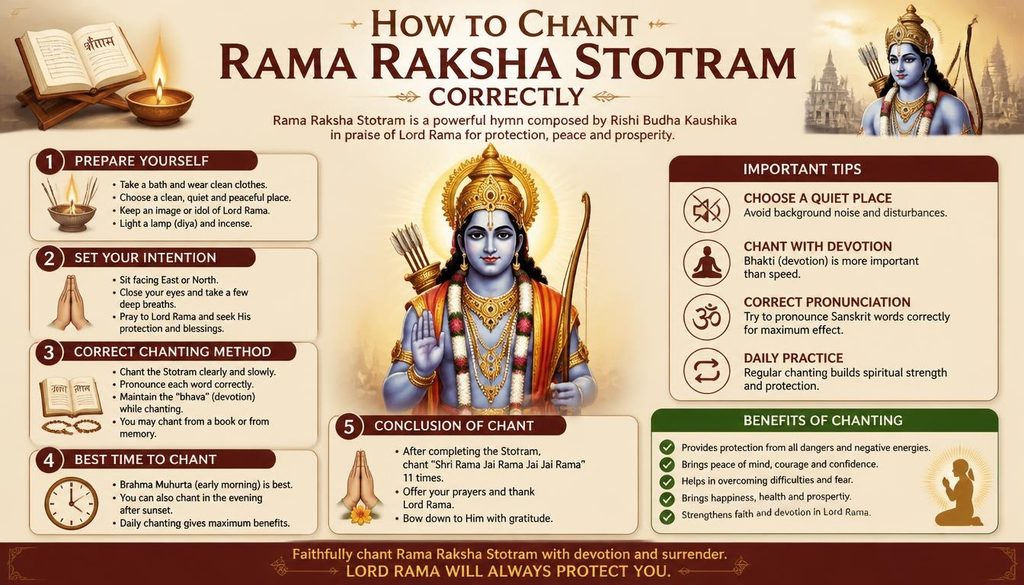
Reciting Rama Raksha Stotram does not require complicated arrangements. Devotion, concentration, and respect are the most important elements of the practice.
However, following a simple routine can make the experience more meaningful.
Choose a Peaceful Place
Find a clean and quiet place where you can pray without unnecessary interruptions.
Some devotees prefer a small home temple with an image or idol of Lord Rama, Goddess Sita, and Lakshmana.
Take a Bath and Prepare for Prayer
Many people traditionally take a bath before morning prayers.
Wear clean clothes and prepare yourself mentally for the recitation. These practices are expressions of respect and personal discipline.
Light a Diya
If it is part of your family tradition, light a diya or incense before beginning.
Offer flowers or other simple devotional items to Lord Rama. Elaborate arrangements are not necessary for a sincere prayer.
Begin with Rama Nama
Before starting the full hymn, remember Lord Rama by repeating:
Shri Ram Jai Ram Jai Jai Ram
This familiar devotional mantra helps bring attention towards the prayer.
Recite the Sanskrit Verses Slowly
Read the verses carefully instead of trying to complete them quickly.
If you are unfamiliar with Sanskrit, use a reliable pronunciation guide or an audio recording to understand the correct sounds.
End with a Prayer
After completing the Stotram, sit quietly for a few moments.
Offer your gratitude to Lord Rama and pray for peace, wisdom, and the well-being of your family.
Best Time to Recite Rama Raksha Stotram
There is no single compulsory time for every devotee. However, certain periods are traditionally preferred for devotional recitation.
Early morning: Many devotees choose Brahma Muhurta or the peaceful hours after sunrise for prayer.
Evening: Reciting the hymn after sunset can provide a quiet ending to a busy day.
Tuesday and Saturday: Some devotees include the prayer on these days as part of their personal worship routine.
Rama Navami: This sacred festival celebrates the birth of Lord Rama. Devotees often perform special prayers, read the Ramayana, and recite Rama Stotrams.
Daily worship: Those who wish to develop a consistent devotional habit can recite the hymn every day at a convenient time.
The most important thing is regularity. A sincere prayer offered with concentration is more meaningful than hurried recitation.
How Many Times Should Rama Raksha Stotram Be Chanted?
There is no universally compulsory number of repetitions for Rama Raksha Stotram.
Many devotees recite the complete hymn once daily as part of their morning or evening worship. Others may follow family traditions or guidance from their spiritual teachers.
Some devotional practices mention chanting 11 or 21 times, but these counts should be understood as optional practices rather than universal religious requirements.
Beginners can start with one complete recitation and gradually become familiar with the Sanskrit verses.
It is better to understand the prayer and pronounce it carefully than to focus only on the number of repetitions.
Rama Raksha Stotram in English
People who cannot read Sanskrit often search for Rama Raksha Stotram in English.
English resources generally provide transliterated Sanskrit verses using Roman letters, along with English translations explaining the meaning.
This makes the prayer easier to follow for beginners and devotees living outside India.
For example:
Shri Ramachandra Kripalu Bhajamana
This is the opening line of another famous devotional hymn, Ram Stuti, rather than Rama Raksha Stotram. It is important not to confuse the two prayers when searching for their lyrics.
For Rama Raksha Stotram, look for a complete transliteration that preserves the original Sanskrit verses.
A good English version should include:
- Original Sanskrit verses.
- Roman transliteration.
- English meaning of each verse.
- Correct pronunciation guidance.
- The introductory and concluding sections.
- Clear explanations of the protective Kavacham.
Rama Raksha Stotram in Hindi and Telugu
The prayer is popular among devotees from different parts of India, and translations are available in several languages.
Rama Raksha Stotram in Hindi
Hindi translations help readers understand the meaning of the Sanskrit verses without needing advanced knowledge of the language.
They are particularly useful for people who want to follow the prayer while understanding the message behind every verse.
Rama Raksha Stotram in Telugu
Telugu speaking devotees also recite this traditional hymn during daily worship.
Telugu versions generally provide the original Sanskrit text in Telugu script, sometimes accompanied by explanations in the Telugu language.
Regardless of the script used, the original devotional message remains centred on Lord Rama’s protection and blessings.
Rama Raksha Stotram English PDF and Audio
Many people prefer keeping a digital copy of the prayer so they can recite it whenever they have time.
A Rama Raksha Stotram English PDF can be useful for beginners who want to read the Sanskrit verses using Roman letters.
Similarly, audio recordings can help listeners become familiar with pronunciation, rhythm, and traditional recitation.
When choosing a PDF or audio resource, consider the following:
- Choose a complete version instead of an incomplete collection of verses.
- Check whether the English transliteration is easy to read.
- Prefer translations that explain the meaning clearly.
- Listen to a traditional Sanskrit recitation for pronunciation.
- Compare different editions if the verse numbering varies.
A printed copy can also be kept near your home prayer area for regular use.
Spiritual Significance of Rama Raksha Kavacham

The Rama Raksha Kavacham is an important part of the hymn because it describes divine protection through the different names of Lord Rama.
The verses invoke Rama to protect the head, forehead, eyes, ears, nose, mouth, throat, heart, arms, and other parts of the body.
This is a powerful devotional image. It represents the belief that the Lord’s blessings extend throughout the devotee’s entire existence.
The protective descriptions also connect with the different roles and qualities of Rama.
For example, Raghava represents his royal lineage, Ramachandra reflects his divine form, and Janakivallabha remembers his loving relationship with Goddess Sita.
The Kavacham therefore combines devotion, remembrance, and surrender in a single prayer.
Connection Between Lord Rama and Other Hindu Deities

Although the Stotram is dedicated to Lord Rama, its spiritual background connects with several important figures in Hindu tradition.
Lord Vishnu: Rama is traditionally regarded as the seventh avatar of Lord Vishnu, who descends to restore Dharma and protect the world.
Lord Shiva: According to the traditional origin story, Shiva revealed the sacred hymn to Budha Kaushika Rishi in a dream.
Goddess Sita: She represents devotion, courage, patience, and purity. Her presence is central to Rama’s divine story.
Lakshmana: Rama’s younger brother represents loyalty, dedication, and selfless service.
Lord Hanuman: Hanuman is one of the greatest devotees of Rama and symbolizes unwavering Bhakti, courage, and humility.
These connections help devotees understand why the prayer belongs to a much larger tradition of Rama Bhakti.
Rama Raksha Stotram and the Teachings of Lord Rama
The spiritual importance of the hymn goes beyond the idea of protection. It also reminds devotees of the values represented by Lord Rama.
His life, described in the Ramayana, provides examples of how a person can remain committed to Dharma even when circumstances become difficult.
Rama respected his parents, honoured his promises, cared for his companions, and stood against injustice.
His relationship with Lakshmana, Sita, Bharata, and Hanuman also highlights the importance of love, loyalty, and responsibility.
When devotees recite the Stotram, they are not only asking for blessings. They are also remembering these qualities and finding inspiration to practise them in everyday life.
That is what makes this prayer meaningful across generations.
Frequently Asked Questions About Rama Raksha Stotram
What is Rama Raksha Stotram?
Rama Raksha Stotram is a Sanskrit devotional hymn dedicated to Lord Rama. It is traditionally recited to seek divine protection, peace, courage, and spiritual blessings.
Who wrote the Rama Raksha Stotram?
Budha Kaushika Rishi is traditionally credited with composing the hymn. According to devotional tradition, Lord Shiva revealed it to the sage in a dream.
How many verses are there in Rama Raksha Stotram?
The hymn is commonly presented as having 38 main verses. However, the total count may differ depending on whether introductory and concluding sections are included.
What is the meaning of Rama Raksha Stotram in English?
Its meaning is a prayer seeking the protection of Lord Rama. The verses praise his divine qualities and invoke his blessings for the devotee’s body, mind, and spiritual well being.
What are the benefits of chanting Rama Raksha Stotram?
Traditionally, devotees associate its recitation with spiritual protection, mental peace, courage, confidence, positive thinking, and stronger devotion towards Lord Rama.
What is the best time to recite Rama Raksha Stotram?
Early morning is a popular time for recitation. However, devotees can also chant it in the evening or at another convenient time according to their daily routine.
Can we chant Rama Raksha Stotram every day?
Yes. Many devotees include it in their everyday prayers. There is no universal restriction against daily recitation.
How many times should we recite Rama Raksha Stotram?
One complete recitation daily is a common practice. Some devotees follow additional repetitions according to their personal beliefs or family traditions.
Is Rama Raksha Stotram written in Sanskrit?
Yes. The original hymn is written in Sanskrit. Transliterated and translated versions are also available in English, Hindi, Telugu, and other languages.
Can beginners chant Rama Raksha Stotram?
Absolutely. Beginners can start by reading an English transliteration and listening to an authentic Sanskrit audio recording. With regular practice, pronunciation and familiarity will improve.
Is Rama Raksha Stotram the same as Rama Raksha Kavacham?
The terms are closely connected. Rama Raksha Stotram is the complete devotional hymn, while Rama Raksha Kavacham generally refers to its protective section.
read more;https://gavorexium.com/ongole-to-tirupati-distance-road-distance-route-and-travel-guide/
Conclusion
Rama Raksha Stotram is a beautiful expression of devotion to Lord Rama and a reminder of the spiritual strength that comes through faith.
Its Sanskrit verses celebrate the qualities of Sri Ramachandra while seeking his divine protection and blessings.
Whether you recite it every morning, listen to its traditional audio, or read its English meaning, the prayer offers an opportunity to pause and reconnect with the values of Dharma, courage, kindness, and devotion.
You do not need to rush through the verses or worry about making every recitation perfect from the beginning.
Start slowly, understand the words, and allow the prayer to become a meaningful part of your routine.